Detailed Report
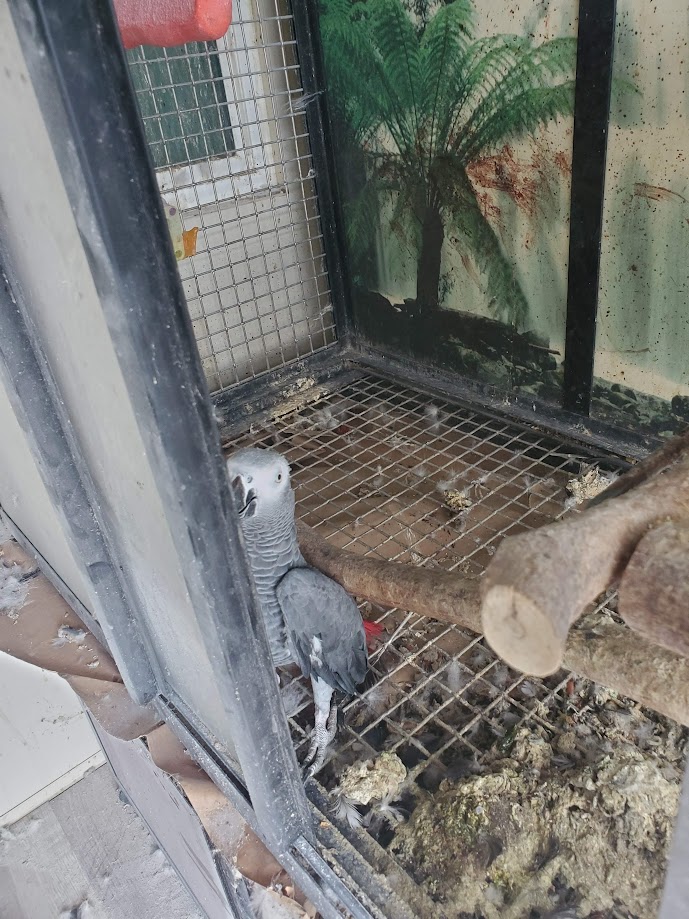
Parrots are amongst the most complex and misunderstood pets. While their intelligence, beauty and social nature make them appealing companions, they are not domesticated animals and require specialized care and long-term commitment. Public perception of parrot ownership is often shaped by social media and pet store marketing, which highlight the entertaining and affectionate aspects of parrots while overlooking the significant challenges of meeting their physical, emotional and behavioral needs. Parrots are loud, messy, and possess powerful beaks. Building a positive relationship with them depends on treating them with respect and engaging with them according to their natural communication style. What is often a mismatch between expectation and reality contributes to high rates of surrender, neglect and rehoming.
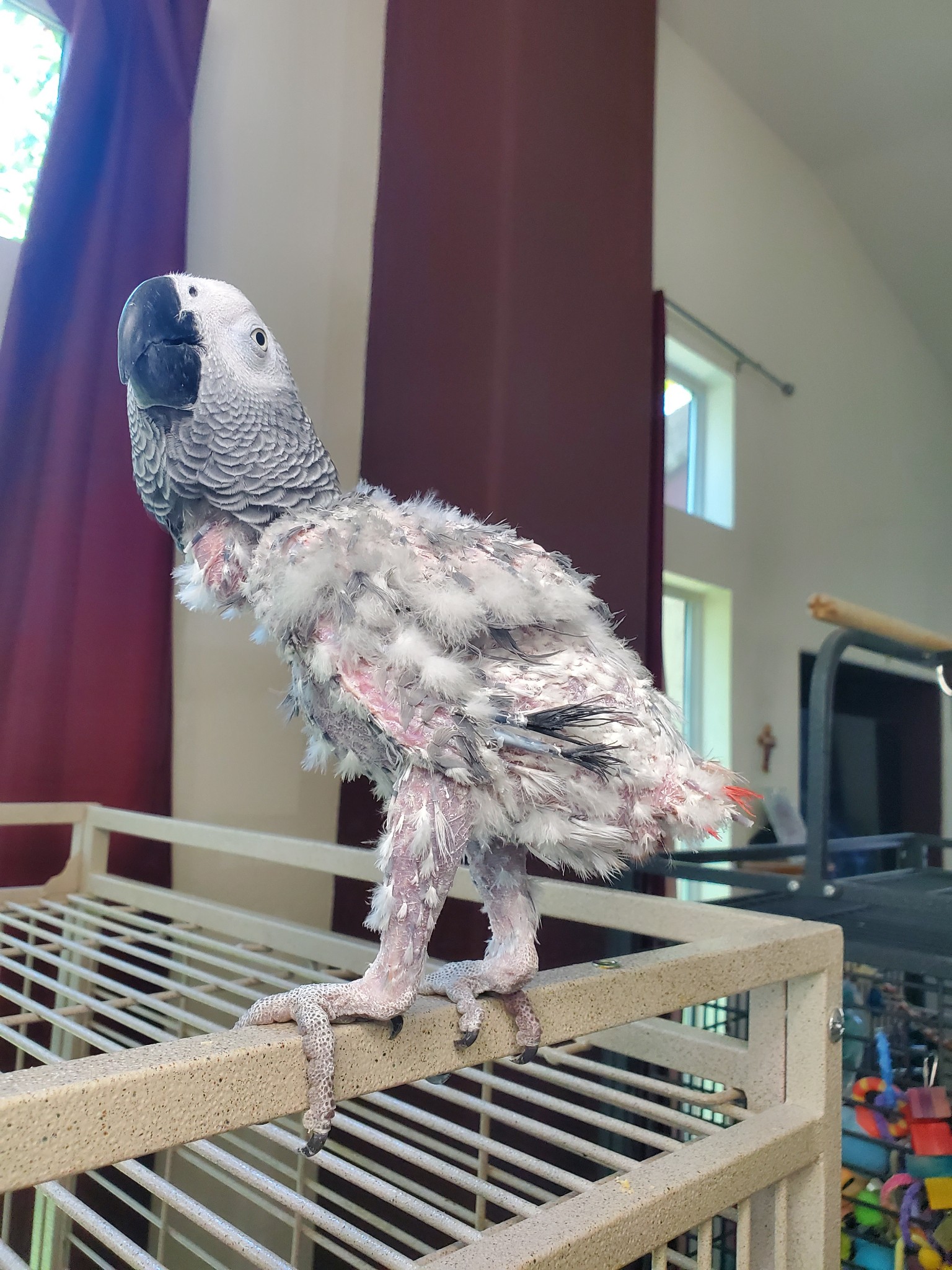
Parrots are often surrendered due to owner lifestyle changes such as family growth, household shifts or, simply, disinterest. Their long lifespans mean many outlive their caregivers. Others have suffered neglect, mistreatment or behavioral challenges, and some come from hoarding situations. In severe cases, parrots are relegated to garages, basements or isolated rooms, deprived of interaction or stimulation. Many are confined to cages that are too small or covered in waste. Some have not been allowed out of their cages for years, have lived without toys or have never even been given a name. Prolonged isolation often leads to extreme fear and distress, causing some birds to thrash, injure themselves, or display other signs of psychological trauma.
As highly intelligent, social animals, parrots require enrichment, foraging opportunities, time outside their enclosures and regular interaction with human companions. When these needs are unmet, they may develop serious behavioral issues, including feather plucking, excessive vocalization and aggression, which can further contribute to their surrender or neglect.
However, with proper care, attention and training, many of these birds can be rehabilitated, allowing them to live healthier, happier lives. Mickaboo is a companion parrot rescue organization dedicated to addressing and mitigating the challenges faced by parrots in need. Founded in 1996 in Northern California, Mickaboo is a registered 501(c)3 nonprofit organization (FEIN 94-3286344). Most of our volunteers and foster birds live in the San Francisco Bay Area and Sacramento Valley. As stated on our website, our goals are:
- To ensure that birds in our care will have a safe, loving environment for life.
- To educate bird owners on the most current standard of care, so that the medical, emotional and dietary needs of their birds will be met.
At Mickaboo, our underlying principle is that “Every Bird Gets An Equal Chance.” Once a bird is in our care, we provide all the medical and supportive care that s/he requires. We do not “triage” birds or spend more money on large species than small. We only euthanize a bird when s/he is suffering without the possibility of recovery. We provide hospice care for terminally ill birds who are not suffering.1See Mickaboo’s “Organizational Structure” document. It’s from 2009. We think this is the most up-to-date copy, but it is unclear, because Mickaboo’s lacck of transparency means corporate documents are not easily accessible
Mickaboo aims to carry out its mission through several key initiatives:
- Education: Educating current and potential parrot caregivers about proper parrot care, helping to prevent future surrenders and improving the lives of companion birds.
- Foster Care: Placing birds in temporary foster homes, ensuring they receive care and attention until they can be adopted into loving, permanent homes.
- Adoption Vetting: Carefully screening and vetting potential adopters to ensure each bird is placed in a safe and nurturing environment.
- Medical Care: Providing essential medical treatment to foster birds, helping them regain health and well-being.
- Training: Working with foster birds to address behavioral issues and prepare them for successful integration into their new homes.
Mickaboo makes a promise to bird owners: should they pass away or become unable to care for their birds, we will find similarly loving homes to honor their wishes.
However, in a significant number of cases, Mickaboo is falling short of its mission and, in some instances, unintentionally contributing to the challenges it aims to resolve:
- Many birds remain in foster care for years, while others are passed from home to home.
- For those birds in foster homes, no preventive vet care is provided.
- The lack of sufficient foster homes, combined with excessive bird intake, has resulted in severe overcrowding situations within the organization itself, as well as costly boarding at a commercial boarding facility and a vet’s office.
- Education of potential adopters is limited to one class, with some material that is questionable, at best.
- Training and follow up are virtually non-existent, contributing to high bird return rates, often due to behavioral reasons.
- Adoption vetting falls short, and birds are placed with inexperienced individuals or those who neglect or mistreat them, creating or exacerbating behavioral problems.
Mickaboo, though founded and operated by well-meaning individuals, faces significant structural and operational issues that undermine its mission. While the organization seeks to provide safe and loving homes for companion parrots, the following challenges illustrate how systemic mismanagement and conflicting priorities hinder this goal:
Misplaced Priorities, Conflicts of Interest and Ethical Concerns
- Misplaced Priorities: Despite not being a wildlife rescue or sanctuary, Mickaboo has devoted substantial resources to rescuing wild conures and the long-term boarding of birds. These practices raise concerns about mission drift and inefficient use of organizational funds.
- Conflicts of Interest: Serious conflicts of interest exist within the board, particularly involving personal relationships with Dr. Fern Van Sant of For the Birds (FTB), who receives the majority (76%) of Mickaboo’s veterinary funding.
- Co-Founder Interference: Co-founder Tammy Azzaro, a veterinary technician, frequently makes medical decisions that may contradict the recommendations of experienced avian veterinarians.
- Resistance to Criticism: Volunteers who raise concerns about these issues are often ignored or ostracized as the board appears to prioritize protecting Dr. Van Sant over addressing valid criticisms.
Care Concerns
- Consistently exceeding our intake and humane capacity: Because of the large number of birds in need, we often exceed our intake capacity, leading to overcrowding.
- Extended Foster Periods: Many foster birds have been in care for years, and there is a high rate of foster home turnover and returned adopted birds.
- Lack of Preventive Care: Birds in long term foster care are not receiving the most basic preventive care that we demand from adopters, even if donors have explicitly contributed funds for a specific bird.
- Questionable Veterinary Practices: While some birds receive no care at all, others undergo excessive and potentially unnecessary treatments, including questionable procedures and prolonged hospitalization. FTB is the primary location where this occurs,
- Lack of Behavioral Training, Inadequate Vetting and Follow Up: Mickaboo’s vetting process for fosters and adopters is too often insufficient, leading to placements with individuals who misrepresent their circumstances, fail to apply training, or exhibit overlooked warning signs. Additionally, coordinators often neglect to review prior records, resulting in repeated issues when placing additional birds with the same individuals. Although Mickaboo claims to work with foster birds to address behavioral issues, this rarely takes place.
- Extended Hospitalization: Many birds have been hospitalized at For the Birds for months or years, at significant expense to the organization.
- Neglect of Challenging Birds: Birds labeled as “damaged” or “aggressive” are often transferred to FTB, where they are effectively abandoned and forgotten, receiving little to no effort toward focused efforts at rehabilitation or, ultimately, placement. These birds remain where they are, without an exit strategy, at significant costs to Mickaboo.
Leadership, Accountability and Cultural Failures
- Leadership Void: Mickaboo has not had a permanent CEO since Michelle Yesney quit the position in 2022. Its acting CEO/COO quit in October 2024 and has yet to be replaced. Tammy, the board’s nominal president, has not once addressed the volunteers or other stakeholders in a leadership capacity since the interim CEO stepped down.
- Apathetic Board: Internal communications reveal that while board members are fully aware of the organization’s issues, they consistently fail to take action to address them.
- Lack of Transparency: Poor record-keeping, conflicts of interest and exclusion of volunteers from decision-making undermine accountability, mislead donors, and reflect a broader culture of organizational dysfunction.
- Ineffective Whistleblower Policy: While Mickaboo recently implemented a whistleblower policy, it is largely ineffective.
Operational Definciencies
- Ineffective Leadership: The organization’s top leadership roles have been occupied by individuals who are difficult to work with, which has contributed to a hostile and unproductive work environment.
- Broken Organizational Culture: Mickaboo’s internal culture, which applicants and volunteers are expected to adhere to, is dysfunctional, inconsistent and counterproductive.
- Volunteer Turnover: Low morale and high turnover amongst volunteers are common, stemming from poor leadership, lack of support, and frustration with systemic issues.
- Slow and Inefficient Processes: Mickaboo’s operations are plagued by leadership bottlenecks, lack of accountability, and a culture that resists delegation and constructive feedback, resulting in chronic delays, underutilized volunteers, and stagnation that prevents the organization from fulfilling its mission effectively.
Education and Communication Challenges
- Outdated and Inaccurate Materials: Some of the educational materials provided to fosters and adopters are outdated, ineffective or, in some cases, harmful.
- Poor Volunteer Training: Coordinators and administrators are not adequately familiarized with Mickaboo’s guidelines or educational materials, leading to inconsistent decision-making.
- Outdated Website and Poor Social Media Presence: The organization’s website faces significant challenges in design, content management and oversight, leading to an overall lack of professionalism and functionality.
- Neglect of Infrastructure: While Mickaboo takes pride in allocating funds primarily toward bird care, its reliance on outdated infrastructure, such as the website and server, creates unnecessary challenges for volunteers and detracts from the organization’s professional image.
This list highlights the urgent need for structural reform, better leadership, updated training and a renewed focus on the core mission of rescuing and rehabilitating companion parrots. Addressing these issues is critical to ensuring Mickaboo fulfills its responsibilities to the birds and the community.
Finances
Before we can begin any discussion of Mickaboo’s internal issues, we need to examine the most tangible evidence of it: our finances. To that end, we have undertaken an audit of what intakes and expenditures we could find. Approximately 75% of our yearly expenses are concentrated at For the Birds (FTB). Another 10% goes to Boarding Facility One (BF1), 8% to the Medical Center for Birds (MCFB) and 4% to Vet Clinic Three (VC3).2We have redacted the names of certain parties and organizations. The remaining amount is unclassified.
Methodology
For this analysis, we focused on a 24-month period spanning September 1, 2022 to September 1, 2024, as this period contains a complete dataset for FTB and MCFB costs, if not for those from Vet Clinic Three and Boarding Facility One. In the rest of the document, we call this the “focus period.” In a few cases, we examined costs for specific birds beyond this timeframe.
We calculated the total number of birds that came through Mickaboo’s system during this time period based on data in ASM, Mickaboo’s shelter management system.
We have access to a Mickaboo financial spreadsheet that records detailed financial data across several categories, including donations and grants, adoption fees, other income, total income, veterinary and pet care expenses, other bills, operating net income, interest and dividends, gains and losses from investment sales and net income. This data is organized monthly from January 2009 through August 31, 2024. We were able to compare these totals to the amounts spent at For the Birds during the last four years of this period, and found that For the Birds costs consistently averaged 77% of Mickaboo total costs.
Mickaboo receives bi-monthly invoices from For the Birds (FTB), which provide a breakdown of each bird’s treatments, the cost per treatment, total cost per bird and aggregate treatment costs for each half-month period. These invoices3Available upon request are integrated into ASM.
We have a number of invoices from Boarding Facility One (BF1), though these records may be incomplete, as some months appear to be missing. We have extrapolated from the current data and filled in missing costs. (BF1 Spreadsheet)
We have twelve non-sequential months during 2021 and 2022 from VC34VC3 Invoices available on request to interested parties. We will make assumptions based on this data. First, we doubled the 12 month amount to get an approximate 24-month total. We were comfortable doing this because we have found that totals at other facilities do not vary significantly from year to year. However, it is not as easy to extrapolate the total number of birds seen in a 24 month period. Therefore we have left the number of birds treated at 31, which was the number seen during the 12 month period. We have similarly calculated the percentage of total number of Mickaboo birds and the average cost per bird based only on the 12 month period.
Finally, we have obtained copies of all invoices from the Medical Center For Birds (MCFB) for our focus period.5Available upon request to interested parties.
Invoices typically include bird name, species, date of service, description of service and cost of service. We identified eight broad service categories, including Boarding, Medical Boarding, Exams, Hormones, Medication, Other, Tests and Treatments. We classified each itemized service under one of these broad categories. Within each of these categories, specific service descriptions vary between facilities. We have created a list of service descriptions for each of the three vet facilities and indicated overlap.
To facilitate comprehensive analysis, we manually input data from these invoices into a Cost Analysis spreadsheet. This has allowed us to create an overall view of our expenditures and generate sortable documents. Our primary objective is to determine the percentage of Mickaboo’s veterinary expenses incurred at each vet clinic and boarding facility, and to analyze the services provided to the birds.
Limitations
Mickaboo has limited financial transparency, so we have only a partial portion of the entire picture. We feel, however, that based on organization tax returns, it is safe to assume that the Mickaboo Financial Spreadsheet is accurate, and therefore we are relatively confident of our assessment of total yearly costs. Furthermore, the data above describes totals that adhere to the Mickaboo Financial Spreadsheet. Furthermore, as of May 2025, we have also received a bird care expense breakdown from Mickaboo leadership, themselves.
The data in ASM includes very few costs or invoices from any of the other seven or so veterinarians we use, making it impossible to determine exact totals of costs and birds. Once we have subtracted the costs and number of birds from available data, we are left with a category of “other birds.” This is a relatively small amount of money, for a large number of birds. We don’t have a final tally of birds that received vet care, so it is impossible to tell how many did not or how much each bird that received care cost.
We are not veterinarians or medical experts so we cannot know for certain that services at one facility are the same as those at another, just under another name.
Some services are labeled with general terms such as “hospital oral treatment,” leaving the specifics unclear. Additionally, test results, treatment outcomes and necropsy details are rarely recorded in ASM, limiting the scope of our analysis.
Finally, because all data entry was performed manually by volunteers who are not professional auditors or accountants, slight discrepancies may appear in some of the totals presented across various charts and graphs.
Findings6Comparisons of Costs by Location
During the 24-month period from September 1, 2022 to September 1, 2024, approximately 570 birds went through the Mickaboo system. Mickaboo’s total veterinary expenses during this period amounted to $1,324,292, averaging $2,323 per bird, if costs were distributed evenly. However, expenses were significantly concentrated at For the Birds and, to a lesser extent, at Boarding Facility One, where the respective veterinary costs totaled $1,008,130 and $125,915. Of these, 225 birds were seen and/or boarded at For the Birds for medical and non-medical purposes, while 13 were non-medically boarded at Boarding Facility One. MCFB costs totaled $105,174 for 88 birds, and two year costs at VC3 were estimated to be $57,984.
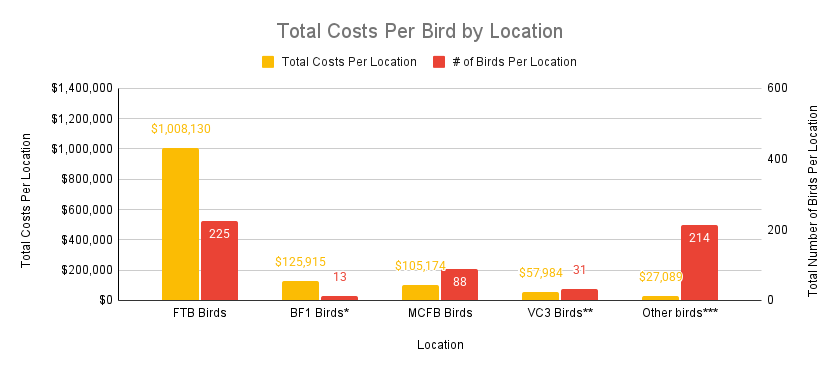
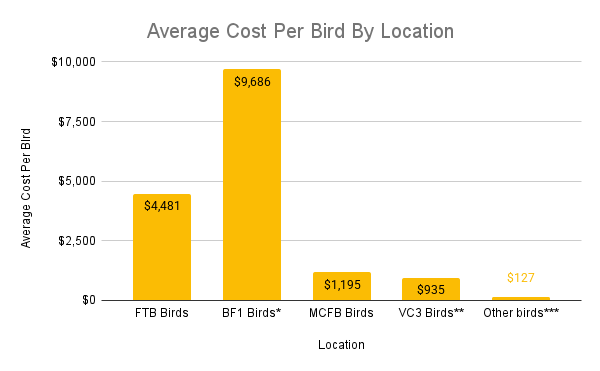
Adjusting for this concentration, the average cost per bird was $4,481 at For the Birds, $9,686 at Boarding Facility One, $1,195 at MCFB, an estimated $935 per bird at VC3, and $127 per all other birds in Mickaboo’s system.
We can assess cost disparities across the four locations by comparing the proportion of total Mickaboo veterinary expenses to the proportion of birds served at each site. Notably, both FTB and BF1 incurred significantly higher percentages of costs relative to the number of birds they served. FTB costs accounted for 76% of total Mickaboo veterinary expenses, while only 39.5% of Mickaboo’s birds were served there. Similarly, BF1 costs represented 9.5% of total expenditures, despite serving just 2.3% of the birds.
At the remaining locations, the percentage of service costs was lower than the percentage of birds served. MCFB costs accounted for 7.9% of total expenses though it served 15.4% of the birds. VC3 costs accounted for 4.4% of expenditures, though it served 5.4% of the birds. Meanwhile, the remaining 37.4% of Mickaboo’s birds, served by Mickaboo’s other vets (or not at all), represented just 2% of total expenses.
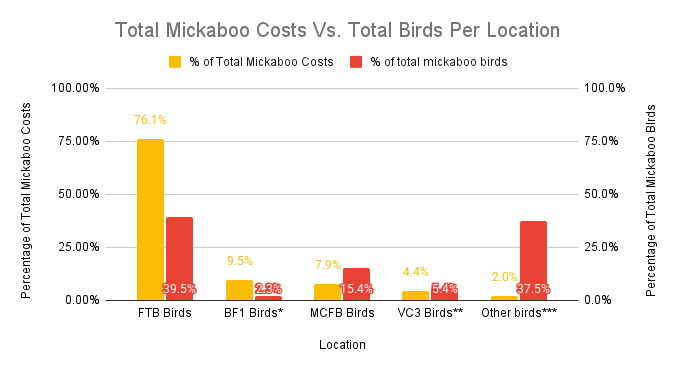
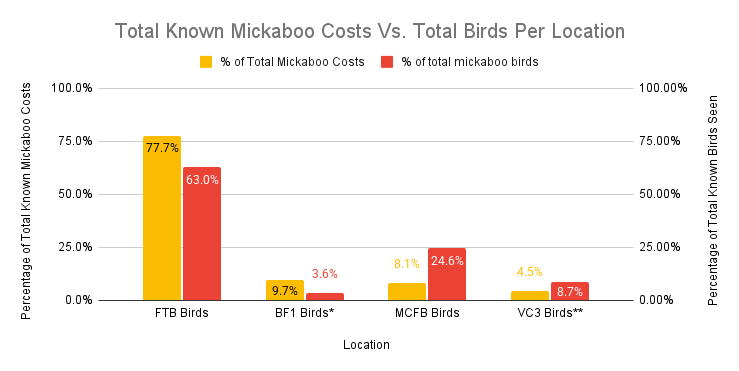
Excluding the “other birds” category and focusing solely on known costs and known served birds, the distribution remains similar. FTB and BF1 show higher percentages of costs relative to the percentage of birds served, while MCFB and VC3 have higher percentages of birds served compared to their share of costs.
For the Birds7FTB Costs Per Bird
Average costs per bird at any veterinary clinic are expected to differ significantly from actual costs, as care expenses can vary widely depending on the severity of illness or injury for each individual. At For the Birds, however, costs were disproportionately apportioned to one particular species—the Wild Conures (WCs), which are often brought in injured or ill from San Francisco and other Bay Area cities. During our focus period, 225 birds were served at FTB, with an overall average cost of $4,481 per bird. However, the average cost per bird differed substantially based on whether the bird was a Wild Conure or a different species. Due to this disparity, we will analyze costs for WCs separately from those for non-WCs.
Of the 225 birds served at FTB, 38 were WCs, and analysis highlights a significant disparity in service costs. The average cost per Wild Conure was $10,891—nearly three times the $3,449 average cost for non-WC birds.
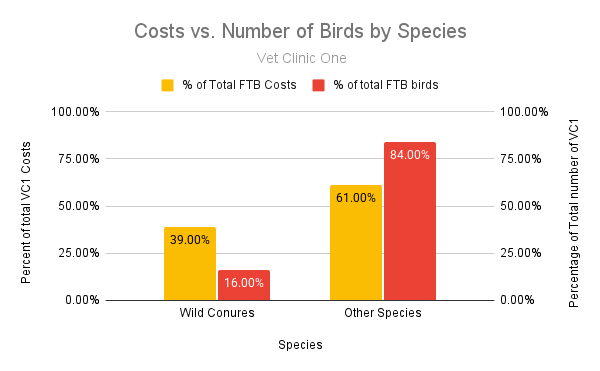
The total costs at FTB amounted to $1,008,130, with Wild Conures accounting for $392,087, or 39% of the clinic’s expenses, despite comprising just 16% of the birds served. In contrast, the remaining 189 non-WC birds represented 84% of the total bird population at FTB but incurred $616,043, or 61% of the costs.
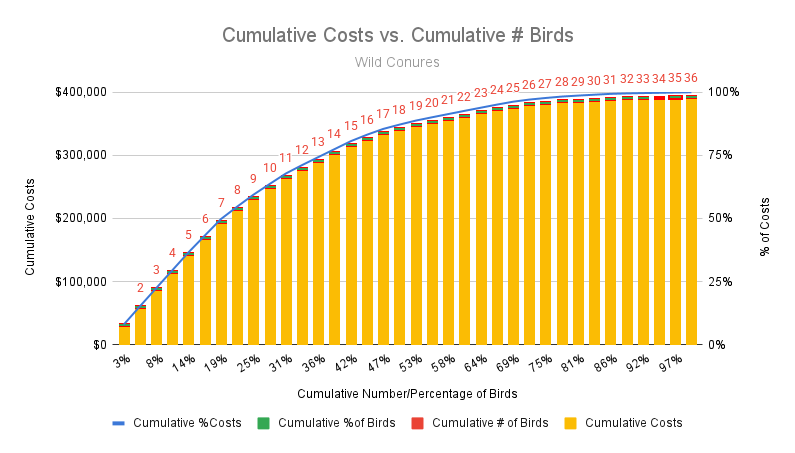
This can be broken down further. Half of the total Wild Conure veterinary costs at For the Birds, amounting to $196,043, were spent on just seven birds, averaging $28,000 each. Furthermore, 90% of Wild Conure costs ($352,878) were incurred by twenty birds, with an average cost of $17,650 per bird.
As would be expected, the individual costs per bird vary widely from the average. The most expensive Wild Conure during the 24-month period analyzed was Poppy, with costs totaling $30,991. Poppy has resided at For the Birds since September 25, 2021, so some of her costs fall outside the focus period. As of this writing, Mickaboo has spent $49,465 on her care. Four other wild conures have surpassed Poppy’s total costs. Bowley, who has been at For the Birds since July 2020, has cost Mickaboo $70,500. Billy, there since June 2018, has incurred similar expenses, exceeding $70,000.
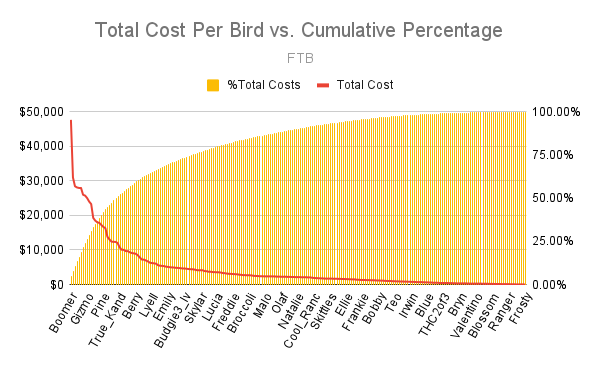
A similar pattern of cost concentration is observed amongst non-Wild Conure species, whose total expenses amount to $616,043. While the average cost per bird is $3,449, expenses are disproportionately skewed toward a small number of individuals. For example, Boomer, a green-winged macaw, accounted for nearly 8% of all non-Wild Conure costs ($47,670) and 5% of total For the Birds costs during the 24-month period, making him the most expensive birds served by For the Birds. Boomer, who has been at For the Birds since July 2, 2020, has accumulated total costs of $105,000 in that time.
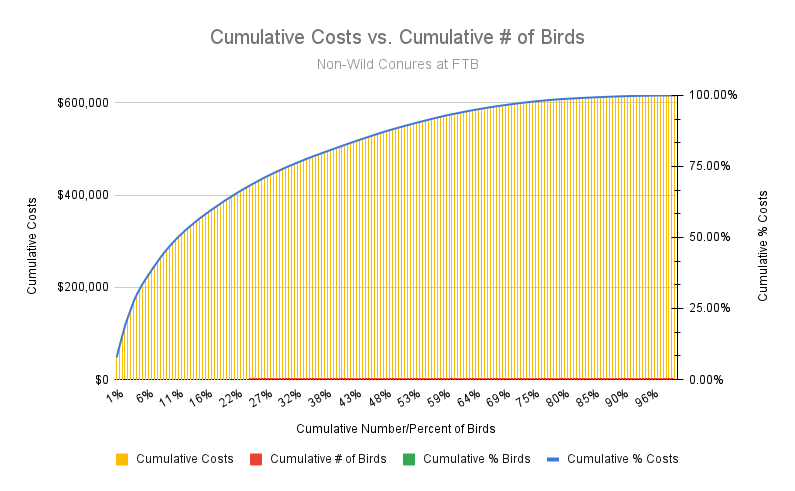
Just four birds (macaws Boomer and Gizmo, African greys Evie and Lilly) accounted for nearly 20% of all non-Wild Conure vet costs. All four had been at For the Birds longer than this report’s focus period. Overall, 50% of For the Birds’s total costs–38% of Mickaboo’s total costs–were concentrated on 23 birds, 4% of the total number of birds that went through our system.
Boarding Facility One8BC1 Itemized Costs Per Bird
During our 24-month focus period, 13 birds (8 macaws and 5 cockatoos) were boarded at BF1. The cost per bird was determined solely by the length of their stay and species. On the whole, macaws had slightly higher costs than cockatoos. Of these, six birds (Bradie, Bomber, Bongo, Jakey, Ruby and Teo) remained at the facility for the entire focus period.
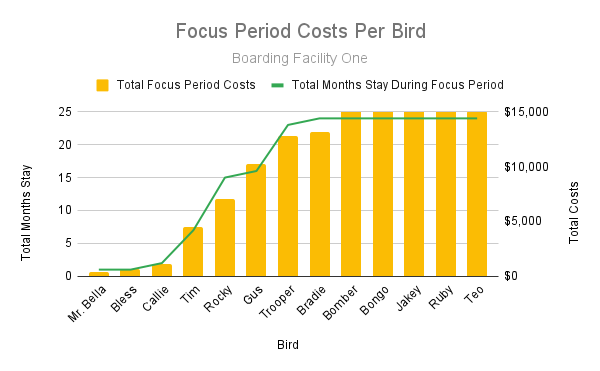
Eight birds—Mr. Bella, Rocky, Trooper, Bradie, Jakey, Bongo, Bomber and Ruby—are still housed at BF1. Two birds, Teo and Bless, have died, while three—Gus, Tim and Callie—have been adopted. Five new birds have since become residents, bringing the total number of current boarders to 13.
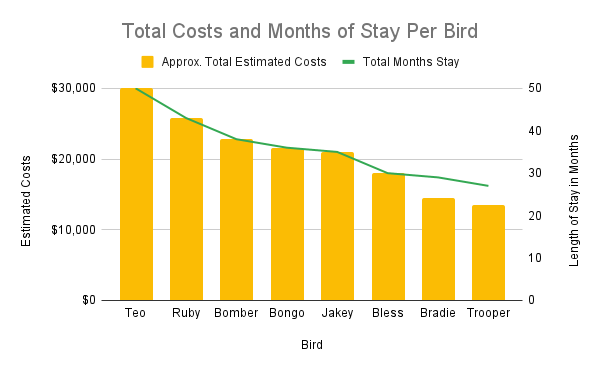
Eight birds have stayed between 27 and 50 months, prompting an analysis of total costs per bird. To estimate these costs, we used conservative average monthly figures: $500 for cockatoos and $600 for macaws. These estimates were based on average monthly costs per species, adjusted downward to account for cost increases since the stay of the first bird, Teo, began. As expected, Teo’s total costs were the highest, amounting to $30,000.
Vet Clinic Three9VC3 Itemized Costs per Bird
The total expenditure for the twelve non-sequential invoices available from Vet Clinic Three amounts to $28,992, covering 31 individual birds. Even if this figure were doubled, it remains significantly lower than the totals reported by For the Birds and also below the Boarding Facility One totals.
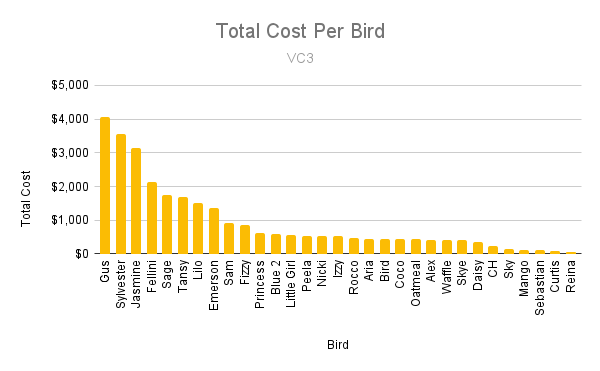
The average cost per bird at Vet Clinic Three was $935. As expected, the data is skewed, with eight birds accounting for 66% of the total costs and an average of $2400 per bird. This distribution is far less pronounced than at For the Birds and does not center on any specific species. The remaining 23 birds, comprising 34% of the total expenditure, had an average cost of $424 each.
Unlike For the Birds, no bird had total costs in the tens-of-thousands, within or outside of the focus period. The highest-cost bird at Vet Clinic Three was Gus, an Amazon parrot, whose care totaled $4,070. Gus is also noted in the For the Birds cost analysis, as his care was transferred there in April 2024. Reina, a conure, had the lowest costs, at $66.
Medical Center For Birds10All MCFB Costs Per Bird
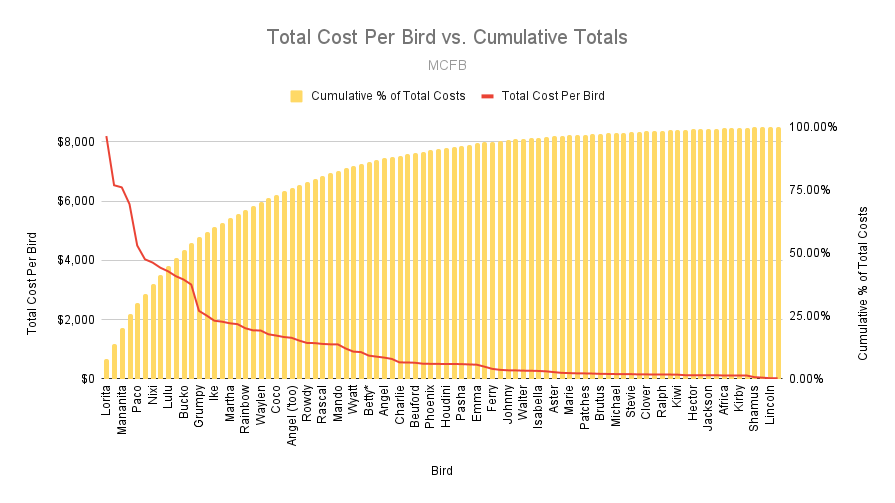
During the focus period, a total of 88 birds were served at MCFB, with cumulative costs amounting to $105,174. This represents an average expenditure of $1,195 per bird. While some birds incurred higher costs than others, there was no discernible pattern linking higher costs to specific species.
The highest-cost case involved Lorita, an Amazon parrot, who required nearly three months of hospitalization in the spring of 2023. This extended length of stay was an outlier and not representative of typical service durations. Her total care costs amounted to $8,200.
In addition to Lorita, 13 birds had service costs ranging from $2,000 to $6,500. Another 18 birds had costs between $1,000 and $2,000, while the remaining 56 birds incurred expenses under $1,000 each.
Cost Categories11Vet Services Per Facility
For the Birds12FTB Itemized Costs
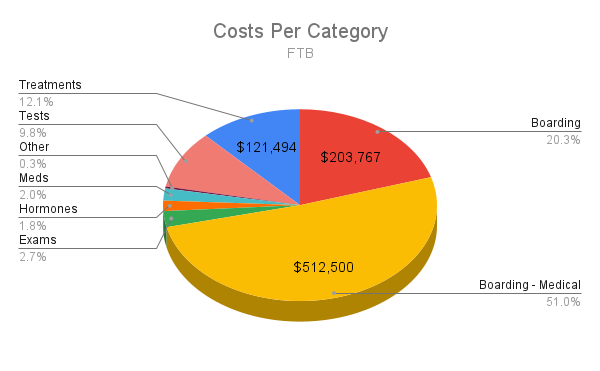
The cost analysis for For the Birds underscores substantial expenditure on boarding services. Of the total expenses at For the Birds, 72% ($720,165) was allocated to boarding or medical boarding for 188 birds, including 32 wild conures and 152 birds of other species. Notably, 29 birds utilized both boarding categories, reflecting some overlap.
Boarding expenses are even more significant when considering wild conures alone,13FTB WC Itemized Costs where they account for 90% of the total veterinary costs within the species. The percentage of boarding costs for non-wild conure species, on the other hand, falls to 58%. 14FTB non-WC Itemized Costs
Treatment expenses totaled $121,494, comprising 12% of the overall clinic costs, with 165 birds (73% of all clinic birds) receiving treatments. Diagnostic tests, performed on 211 birds (93% of the total), accounted for $98,206 or 9.8% of total expenditures. Exams, conducted on 200 birds (89%), represented $27,081, or 2.7% of total costs. Hormone treatments, administered to 41 birds (18% of the total), amounted to $17,645, or 2.7% of overall expenses. The remaining $23,800, or approximately 2.4%, was attributed to medications and other services.
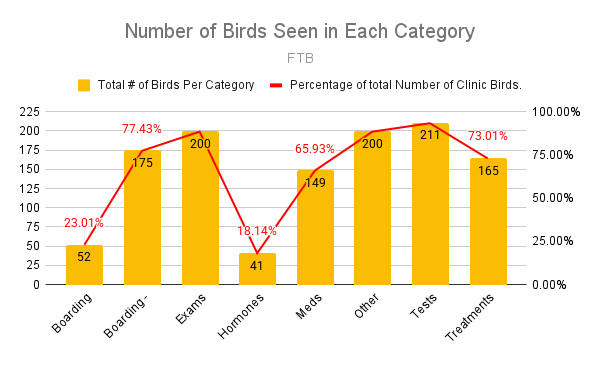
The majority of wild conures (86%) received exams, diagnostic tests and other services, while smaller proportions were prescribed medications (36%) or hormone therapy (11%). Collectively, these services accounted for only 10% of the total costs for wild conures. In contrast, treatments and diagnostic tests represented the two most significant cost categories for non-wild conures, amounting to $104,640 (17.2% of total non-wild conure costs) and $86,053 (14%), respectively.
For wild conures, the most common treatments included unspecified inpatient care, inpatient oral therapies, and combined inpatient oral and injectable treatments. Frequently administered medications included Metacam injections (7 birds) and Robenacoxib injections (5 birds). Diagnostic procedures were dominated by gram stains, fecal tests, PDFD/APV/Chlamydia testing, and imaging, while smaller percentages underwent bile acid panels and complete blood counts (CBCs).
Similarly, unspecified inpatient treatments were the most frequently administered to non-wild conures, provided to approximately 38% of this group. Nebulization therapy and saline misting followed, given to 28% and 15%, respectively. Amongst non-wild conure species, gram stains and fecal tests were the most commonly performed diagnostic procedures, administered to about 87% of the population. Vitamin ADE injections were the most frequently used medication, given to 83% of non-wild conures, followed by Robenacoxib and Metacam injections, each administered to 15%.
Vet Clinic Three15VC3 Itemized Costs
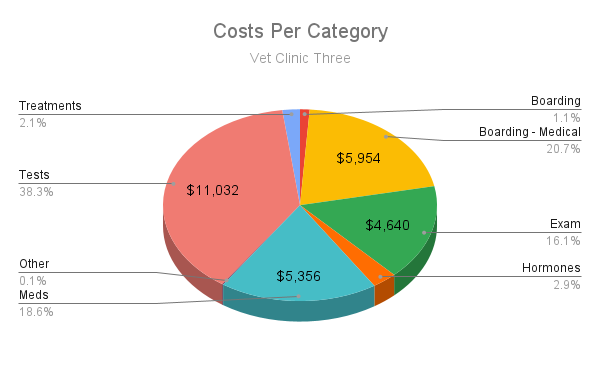
At Vet Clinic Three, the highest expenditures were for diagnostic tests, totaling $11,032, or 38% of overall costs. Medical boarding followed, accounting for $5,954 (21%), while medications and exams represented $5,356 (19%) and $4,640 (16%), respectively.
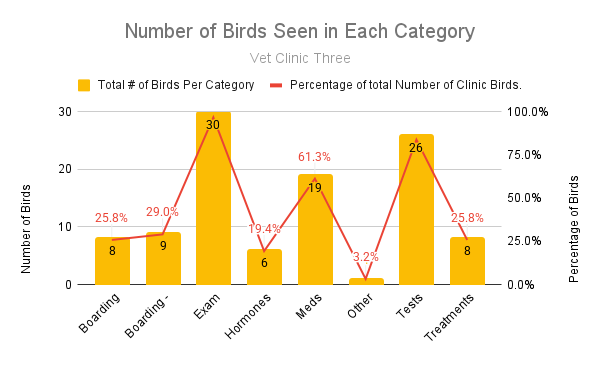
Exams were the most frequently performed service, with nearly 100% of birds receiving one. Tests ranked second, performed on 84% of the birds, while 61% received medications and 21% underwent medical boarding. Ciprofloxacin was the most commonly prescribed medication, administered to 10 birds, followed by Meloxicam, given to seven birds. Amongst diagnostic tests, fecal and gram stains were the most frequently conducted, each performed on 24 birds.
Medical Center For Birds16MCFB Itemized Costs
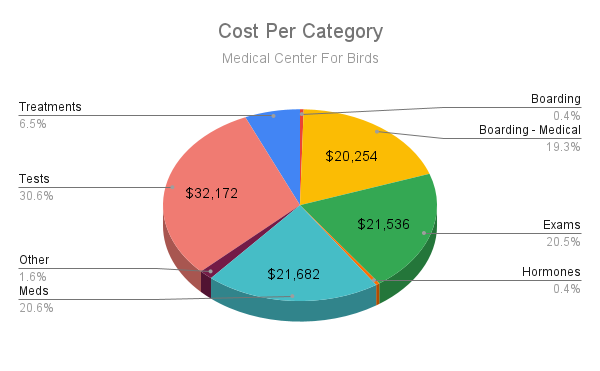
At MCFB, diagnostic tests constituted the largest expense, totaling $32,172 and accounting for 31% of the clinic’s total costs. Medications, exams and medical boarding each contributed approximately $20,000 to the overall expenses, representing about 20% of the total costs per category.
Exams were the most frequently performed service at the clinic, conducted on 78 birds and representing 90% of all patients. Tests were the second most common, administered to 54 birds (62%), followed by medications, which were provided to 46 birds (53%). Boarding, treatments and other procedures were carried out for 35 birds per category, accounting for approximately 40% of the clinic population.
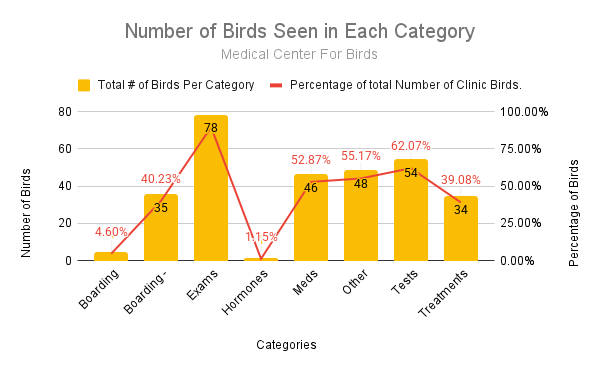
Amongst birds that underwent testing, hematology was the most common procedure, performed on 33 birds (61% of those tested). This was followed by chemistries, conducted on 28 birds (52%), imaging on 24 birds (44%), and fecal exams on 18 birds (33%).
Meloxicam was the most frequently administered medication, given to 21 birds (24% of those receiving medications). Enalapril was provided to 15 birds (17%), while Tramadol and Isoxsuprine were each administered to 10 birds (11%). Additionally, 20 birds received unspecified “inpatient” medications.
Of the 34 birds that received treatments, procedural sedation was the most common, performed on 22 birds (65%). Fluid therapy followed, provided to 16 birds (47%), and assisted feeding was administered to 12 birds (35%).
Conclusion
Boarding, both medical and non-medical, represents the largest portion of Mickaboo’s bird care expenses. At FTB alone, more than half of all veterinary costs are attributed to boarding. When including expenses from Boarding Facility One (BF1), this figure increases significantly. Over the 24-month period analyzed, $125,915 was spent boarding 13 birds at BF1, bringing the total cost of hospitalized and boarded birds to $846,080—65% of Mickaboo’s total bird care expenditures.
At FTB, 52 birds were boarded for non-medical reasons, a number that rises to 65 birds when including those housed at BF1. The total cost of non-medical boarding across these locations amounts to nearly $300,000, accounting for 22% of Mickaboo’s total bird care costs over the two-year period. Notably, at least 80% of patients at For the Birds experienced some form of boarding, compared to 40% at MCFB and only 22% of birds at Vet Clinic Three. Additionally, extended boarding spanning months or even years is common at For the Birds, whereas it is rarely observed at MCFB or Vet Clinic Three.
Misuse of Funds and Conflicts of Interest
Misplaced Priorities
The Wild Conures
Despite not being a wildlife rescue, Mickaboo has allocated considerable financial and logistical resources to rescuing wild conures without treating them as wildlife or liaising with wildlife regulatory authorities. Mickaboo’s involvement with the wild conures highlights two critical issues:
- Mickaboo lacks the expertise and infrastructure to function as a wildlife rescue.
- The conures consume a disproportionate share of Mickaboo’s resources, and diverting significant funds to wild conure care misrepresents the organization’s mission and misleads donors.
While Mickaboo’s efforts to rescue the wild conures are commendable, they raise significant concerns. As a companion parrot rescue, Mickaboo lacks the specialized expertise required to make humane and ethical decisions about wildlife. While some birds are rehabilitated and released, many are too sick or injured to return to the wild. These unreleasable birds are often kept for months or even years in homes or vet clinics. While some may adapt to life as companion birds, such determinations require expert evaluation, and any homes chosen must prioritize the birds’ individual care and avoid overcrowding.
As discussed above, in our two year focus period, the wild conures in Mickaboo’s care accounted for 30% of all organization expenditures, despite representing just 6.5% of the birds in foster care. Seven of these wild conures alone account for 50% of the total wild conure expenses, meaning these few birds are responsible for nearly 15% of Mickaboo’s total bird care costs. This over-allocation of resources negatively impacts other birds in Mickaboo’s care, many of whom are denied preventive care despite the organization’s stated commitment to such measures. That money would be better spent on behavioral training and enrichment efforts, which could reduce the number of birds returned to Mickaboo for behavior problems.
At the time of this writing, there are approximately fifty-three wild conures in Mickaboo’s care. Fifteen of these are housed at FTB, ten in Dr. Renee Luehman’s home, fifteen in Sarah Laramie’s home, and the others are spread amongst four other foster homes.
Currently, six wild conures require intensive care due to severe disabilities. They cannot perch, and they rely on specialized cages. Their conditions include fecal retention, clostridial infections, and a need for assistance with defecation. Their care involves extensive medical intervention, including anti-inflammatory injections, stool softeners and a specialized diet, along with regular grooming to manage trauma-induced beak deformities. The following three birds provide examples:
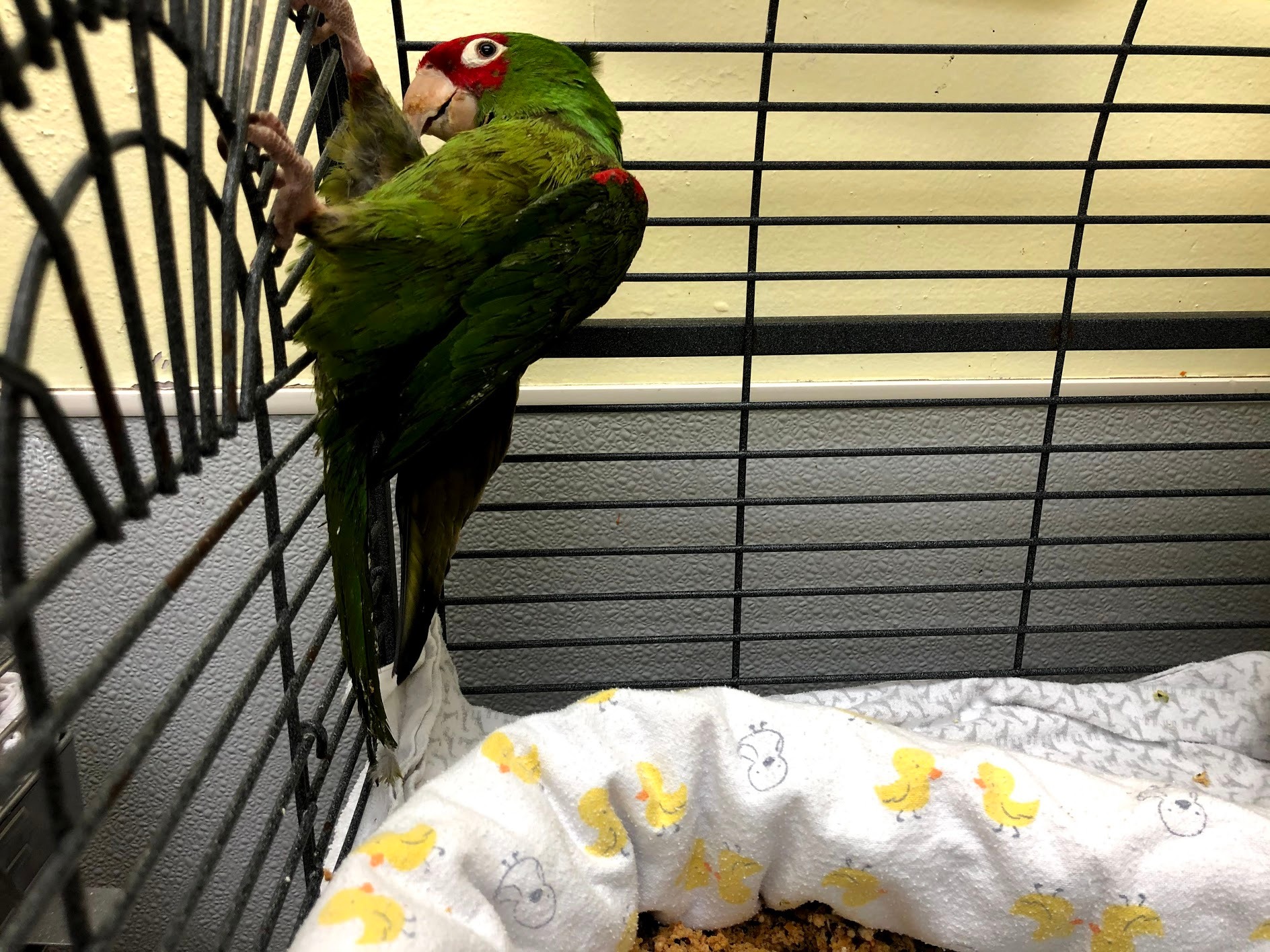
Billy: 7 yrs at FTB; $80,000
Wild Conure Billy, under FTB’s care since June 1, 2018 after being found collapsed on a fire escape, has accrued $70,621 in care costs. Initial testing revealed lead poisoning, prompting chelation therapy, antibiotics, fluids and gavage feeding, with gradual improvement as he began eating independently. Despite ongoing challenges, including his tendency to startle and engage in self-destructive behavior, Dr. Van Sant claims that Billy has shown signs of progress over time. As of this writing, he remains under FTB’s care and continues to face difficulties.
Poppy, under FTB’s care since September 25, 2021, suffered severe spinal trauma, resulting in multiple fractures and little to no leg function. Her care has incurred more than $49,645 in costs and includes pain management, antibiotics, wound care and supportive medications like diazepam and butorphanol, which have helped her remain calm and improved her appetite. While her injuries are complex, and she has poor vascular tone, a bowed femur and a displaced knee, Dr. Van Sant believes ongoing care and potential physical therapy may provide “further insights” into her recovery. Poppy’s long-term prognosis remains uncertain, though again, Dr. Van Sant is “cautiously optimistic” about her potential for improvement.
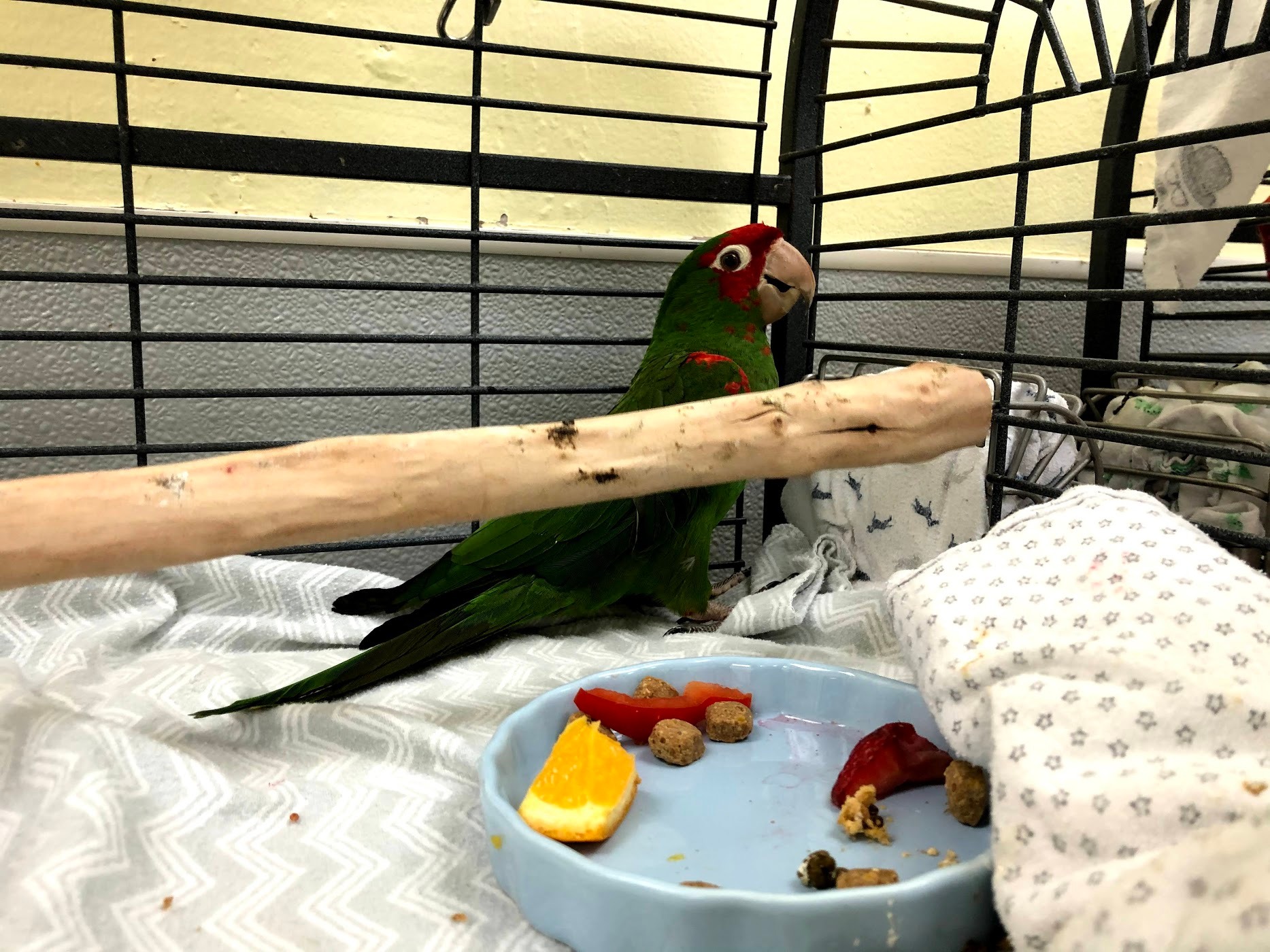
Jerome: 5.5+ yrs at FTB; $50,000
Jerome, cared for at FTB from July 2018 until his passing in February 2024, incurred $49,891 in care costs. Upon intake, he displayed severe symptoms, including a head tilt, lethargy and gastrointestinal issues, which later revealed bleeding, elevated metal levels and other complications. Despite extensive care and cautious optimism by Dr. Van Sant, his health steadily declined, and in February 2024, a large coelomic mass was discovered. Euthanasia was authorized as the mass was untreatable, marking the end of his prolonged battle with multiple health issues.
Though the board has known for a long time that this is not sustainable,17 Board Meeting Transcript from 9/5/24, Email thread from March 2024 Mickaboo’s co-founder and president, Tammy Azzaro, argues that these birds show resilience and deserve continued care. Similarly, former CEO Michelle Yesney appears to conflate an ill or injured bird’s reluctance to show fear (a survival instinct) with it feeling happy and content, which is something we warn against in the Basic Bird Care class.
Others within Mickaboo question the ethics of prolonging the lives of wild birds in such restrictive conditions. The suggestion to consider humane euthanasia for the most debilitated birds has sparked debate, weighing their limited quality of life against the high costs and resources required to sustain them. Tammy is opposed to euthanasia. She emphasizes the organization’s responsibility to provide these birds with the best possible life, while others argue that the WC’s prolonged dependence on medical intervention highlight the need for a more humane approach.
Additionally, as will be discussed below, concerns about the care environment at FTB have been raised. Birds seen at FTB receive excessive treatments of questionable value at considerable expense. The facility offers limited enrichment and lacks transparency, as Mickaboo volunteers have at times been unable to visit the birds.18Can’t Visit Birds at FTB The prolonged hospital stays and inability to transition these birds into more natural settings underline the need for a reassessment of Mickaboo’s approach to wild conure rehabilitation and care.
This discussion reflects broader ethical and practical challenges in balancing the mission to save wild birds with their long-term welfare and quality of life that Mickaboo, as a companion bird rescue, is not qualified to address.
Long Term Boarding
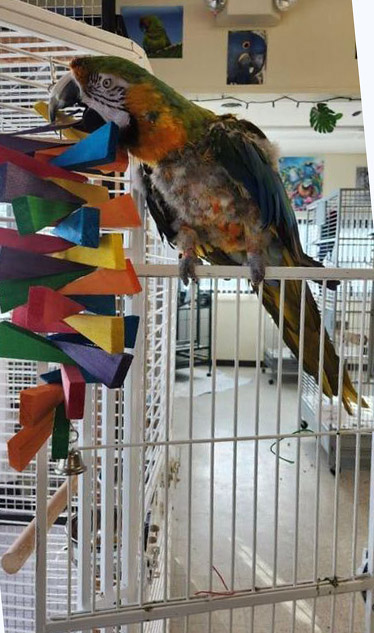
At the boarding facility
Mickaboo states that it does not operate a central bird care facility. Instead, birds in our care are housed through a network of foster homes. This decentralized model is a core part of our identity—Mickaboo proudly emphasizes that all funds are directed toward bird care, not infrastructure, and highlights the foster-based system in our public messaging. Our Organizational Structure and Policies document explicitly states that we do not maintain a facility, and that “our ability to take in birds is limited by foster home space.”
While technically accurate, this description does not reflect current practices. In reality, Mickaboo relies on two facilities where birds are regularly boarded—often for extended periods—at significant cost. As previously noted, non-medical boarding alone accounted for 22% of Mickaboo’s expenses over our two year focus period, covering just 65 birds. When including long-term medical boarding, exclusively at For the Birds (FTB), the combined cost of boarding rises to roughly 65% of the organization’s total expenditures.
Many of the birds at FTB have remained there for months or years, a situation not observed at other veterinary practices and one that appears medically unnecessary. This practice runs counter to Mickaboo’s stated mission of ensuring “the highest quality of life for our companion birds.”
Conflicts of Interest
As our financial review revealed, veterinary resources are disproportionately allocated to a small percentage of birds at a single clinic. Fosters are told that Mickaboo cannot afford routine check-ups or annual well-bird visits, despite the organization’s advocacy for preventive care in its educational materials. Yet, birds sent to FTB undergo extensive testing and examinations, with most being hospitalized for at least a day or two—some for significantly longer. A fuller account of these birds and their procedures can be found in our Focus Birds section.
Dr. Fern Van Sant maintains a long-standing personal relationship with key leadership figures at Mickaboo, which refers a majority of its avian medical cases to her clinic, FTB. Over the years, Dr. Van Sant has received millions of dollars in veterinary fees from Mickaboo, despite not holding board certification in avian medicine.
Though Mickaboo states in its “Organizational Structure“ document that “wherever possible we use board certified avian vets,” leadership at Mickaboo has consistently promoted Dr. Van Sant’s services while dismissing or minimizing the value of board-certified avian veterinarians. Volunteers who raise concerns about this imbalance or question the lack of credentialed oversight are often silenced, accused of being divisive or excluded from decision-making.
This dynamic presents a clear and ongoing conflict of interest: personal loyalty and financial dependency appear to be prioritized over bird welfare, professional standards and accountability. It has fostered a culture where scrutiny is discouraged, second opinions are rare, and serious concerns about care practices are routinely ignored.
Resistance To Criticism and Founder Interference
Amid these issues, some volunteers have called for a critical evaluation of Mickaboo’s list of recommended veterinarians and the standards by which our vets are assessed. While leadership asserts that Tammy’s extensive experience as a vet tech and her critical perspective render independent audits unnecessary,19Slack “Vet Neutral” Exchange volunteers argue that third-party assessments would help avoid conflicts of interest and ensure transparency and credibility in vet recommendations.
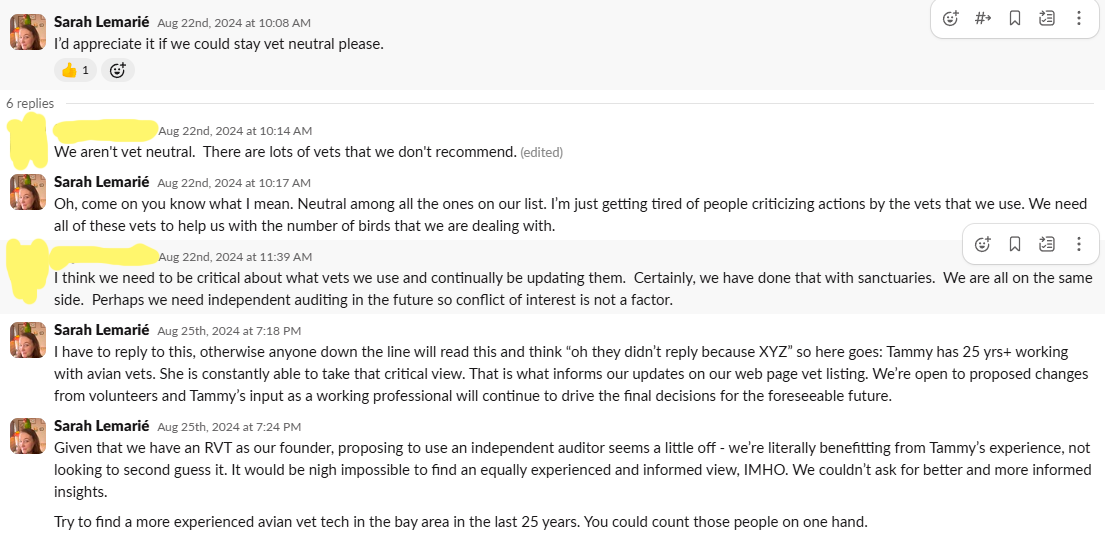
Mickaboo highlights the importance of using avian vets in its training materials, but they don’t provide any kind of basis for how to judge the quality of those vets. Only three of its twelve “approved” veterinary hospitals employ actual board certified avian specialists. Additionally, despite disclaimers on its website suggesting neutrality in recommending veterinarians, Mickaboo actively seeks to restrict the use of certain avian-focused vets,20Examples Available Upon Request often without employing the input of recognized specialists within their system. Although some of these restrictions might be warranted, this approach creates an impression of inconsistency and arbitrariness that limits Mickaboo’s ability to enforce organizational policies.
For example, concerns have been raised regarding the practices of certain veterinarians, including one we’ll call Vet A. Criticisms highlight issues such as the frequent prescription of antifungal medications without adequate diagnostic evaluation, reliance on potentially outdated methodologies rooted in earlier veterinary teachings, and a perceived lack of adaptation to modern advancements in avian care.
Despite these concerns, some fosters and adopters continue to utilize Vet A’s services, underscoring a lack of effective communication and enforcement of Mickaboo’s veterinary recommendations. This highlights a disconnect between Mickaboo’s internal reservations about certain veterinarians and its external messaging. While leadership has raised concerns about Vet A in internal discussions, these issues are not effectively communicated through public channels, leaving fosters and adopters without a clear understanding of why specific veterinarians are discouraged. If volunteers ask why a certain vet is excluded, they are told to contact Tammy or one of the other leaders for a private conversation.
The issue is compounded by Mickaboo’s relationship with Dr. Van Sant. Like Vet A, Dr. Van Sant has been criticized for employing questionable practices that are either outdated or lack support from peer-reviewed studies. Both Dr. Van Sant and Vet A appear to work in environments where their practices and opinions remain largely unchallenged, limiting their engagement with newer ideas or peer-reviewed input.
Veterinary progress depends on openness to new information, often fostered by collaboration with a diverse range of professionals, including new veterinarians who bring fresh perspectives and challenge established norms. A willingness to engage in dialogue, accept feedback and foster a collaborative approach is essential for growth and innovation. In contrast, defensiveness when faced with questions or alternative viewpoints, as seen in some cases, may stifle advancement and perpetuate outdated practices.
Despite similarities, Dr. Van Sant is on Mickaboo’s approved list of vets, whereas Vet A is not. This underscores the conflict of interest at the heart of Mickaboo’s operations. Michelle Yesney, Mickaboo’s former CEO and current board member, is a close friend of Dr. Van Sant and also plays a key role in protecting her position. Michelle’s daughter works at FTB. Other board members similarly maintain close ties with Dr. Van Sant and FTB, perpetuating a lack of accountability and fostering an environment that prioritizes personal relationships over objective oversight.
Furthermore, Tammy holds significant influence over Mickaboo’s medical decisions, despite lacking formal veterinary credentials. While her extensive experience as a veterinary technician is undeniably valuable, she is not a vet, and her position and influence blur the lines of responsibility and expertise. It is critical to recognize that medical decisions should ultimately rest with qualified professionals, ensuring that the organization’s standards align with its stated emphasis on evidence-based, high-quality avian care.
Establishing clear and consistent standards supported by factual explanations for veterinary recommendations is essential to ensuring transparency, credibility and alignment between Mickaboo’s internal policies and external messaging. While board certification in avian medicine could serve as a potential benchmark, it is important to recognize that Mickaboo currently supports veterinarians who lack this credential. Similarly, the use of questionable procedures could serve as grounds for restrictions, but Mickaboo’s heavy reliance on a veterinarian with controversial practices risks undermining the consistency and credibility of such standards.
About Avian Board Certification
Certain leadership figures have repeatedly dismissed or discredited the value of board certification for avian veterinarians, promoted non-certified practitioners without disclosure of personal conflicts of interest, and discouraged open discussion about credentialing and veterinary oversight. These practices present serious ethical and animal welfare concerns. A recent exchange between volunteers and leadership highlights these issues.21Dismissal of Board Certified Vets Slack Exchange Therefore, we feel it necessary to explain what ABVP is–and isn’t.
The only official requirement for treating birds as a veterinarian is a DVM degree and an interest in avian medicine. This means any licensed vet can present themselves as an avian vet, regardless of whether they have undergone specialized training. True avian board certification—comparable to specialties in human medicine—is rigorous, time-consuming, costly, and requires a sustained commitment to continuing education, scientific research and peer-reviewed standards. It is true that a veterinarian who has not achieved recognition through an AVMA approved certifying specialty may practice very good quality medicine and/or surgery, but it also is true that of those who have, there is a higher probability of balanced knowledge and skills within that specialty merely because of what is required to achieve and maintain that recognized status.
Unfortunately, there are some organizations that offer superficial credentials in exchange for a membership fee, creating the illusion of certification. Typically, these are not recognized by the AVMA or ABVS (American Board of Veterinary Specialists). As a result, consumers often have no reliable way to assess a veterinarian’s qualifications. Birds differ from dogs and cats far more than dogs and cats differ from humans—yet we would never consult a veterinarian for our own healthcare. In avian medicine, there are credentialing letters after a vet’s name that truly matter, but too often, the public doesn’t know what to look for.
Three organizations offer certification to veterinarians specializing in bird care. The American Board of Veterinary Practitioners (ABVP) is one of them. This certification is overseen by the American Veterinary Medical Association (AVMA) and involves:
- A DVM degree
- Advanced, focused training in avian medicine (often through residency or structured mentorship)
- Submission of case logs and reports
- A comprehensive specialty examination
- Ongoing maintenance through continuing education (minimum 25 hours/year)
- Recertification every 10 years
- Peer-reviewed publications, lectures and conference participation
Unlike membership-based organizations (e.g., AAV), ABVP certification is merit-based, reviewed and maintained through independent oversight.
Mickaboo volunteers and staff who have raised concerns or asked for clarification regarding board certification and Mickaboo’s vets have been accused of being “judgmental,” “weaponizing credentials” or undermining community morale. This has created a chilling effect on honest discussion and inquiry, fostering a culture of silence around important issues affecting bird care. Moreover, volunteers are often ignored or ostracized as the board appears to prioritize protecting Dr. Van Sant over addressing valid criticisms.
Publicly dismissing the value of board certification—while relying heavily on a non-certified vet with personal ties—puts the organization’s credibility, reputation and bird welfare standards at risk. It also opens the door to legal and ethical scrutiny from donors, adopters and the veterinary community.
Although board certification is not the only criteria by which scientifically balanced acuity of care can be measured, it is a recognized standard in many venues. Non-certified avian vets can, and do, provide excellent care. However, the complexity of Mickaboo’s long-term and challenging cases highlights the need for a structured, team-based approach guided by a recognized avian specialist to ensure birds receive balanced, forward-moving care.
Care and Welfare Concerns
Exceeding Our Intake Capacity
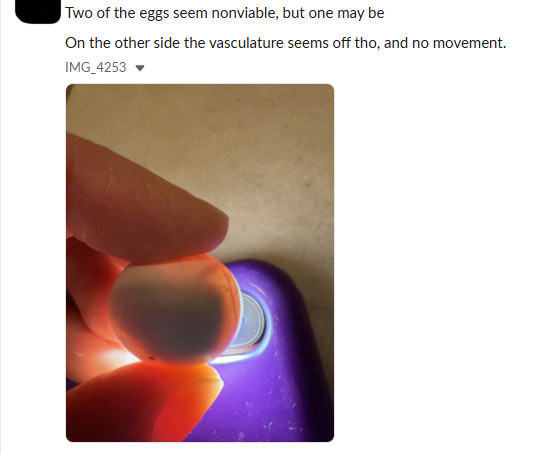
Mickaboo Volunteer Tests Egg for Viability
A significant challenge Mickaboo faces is overcrowding. This is largely due to Mickaboo’s deep desire to help as many birds as possible, coupled with a lack of foster or adoptive homes. As animal rescuers, turning away birds in need is antithetical to our nature. Several practices compound the problem: taking in birds without available foster homes; taking in birds who are not from poor environments, whose owners simply don’t want them anymore; volunteers searching shelter listings to find birds; working with third parties when owners are not incapacitated; and, less frequently, incubating and hatching eggs encountered during bird rescues.
We currently have three locations in which significant overcrowding exists. Sarah Lemarie reportedly houses over thirty birds in her duplex, including fifteen wild conures. Dr. Renee Luehman has twenty-five birds, including ten wild conures. The third location is FTB, where approximately thirty birds live or spend considerable time in the back of the facility–and those are just Mickaboo birds.
Exceeding capacity can create significant problems. Birds require individualized care, attention and observation to thrive. Most species also need considerable human interaction to remain comfortable in a human-centric environment. Providing this level of care is difficult even with a dedicated team of three to four people when managing so many birds in one location. In situations where over a dozen birds are housed in a single home, they may survive and stay physically healthy but are likely only receiving the bare minimum of care. Over time, this can negatively impact their socialization skills and overall health.22Birds turning “Feral”
Overcrowding also limits the space birds need to play and move safely, especially when different species are housed together. Birds of varying social dynamics can experience heightened stress when confined to shared, crowded environments. This stress, compounded by inadequate space, can lead to behavioral issues and discomfort. Additionally, the dander produced by birds can quickly degrade indoor air quality, potentially triggering allergies or respiratory issues in both birds and humans. Managing this becomes significantly harder as the number of birds in an enclosed area increases.
Maintaining proper quarantine measures in overcrowded conditions is nearly impossible, especially when birds and people frequently move in and out of the space. A single communicable disease in one bird can easily spread to the entire household, putting all the birds at risk. Furthermore, birds require daily cleaning of their cages and environments to ensure hygiene and health. The more birds in one location, the harder it becomes to meet these basic standards of care, leading to unsanitary conditions and potential health risks for the flock.
The most significant cause of overcrowding is taking in birds when there are no foster homes available, especially if the bird has not been abused, is not in a poor environment and is with an owner that simply doesn’t want it anymore. In these situations, surrenderers are using Mickaboo to do what they could do themselves–rehome a bird–especially if Mickaboo provided guidance on how to vet potential adopters.
Secondly, certain Mickaboo volunteers routinely trawl through shelter listings to find birds. Despite the strain on our resources, we often initiate contact with shelters where birds have been surrendered, rather than waiting for the shelters to reach out to us—as they are supposed to do when they need assistance. This approach is not only inefficient, it undermines our relationships with shelter staff. In fact, when we proactively contact shelters about birds they are not ready to release, it can alienate them and discourage future collaboration.
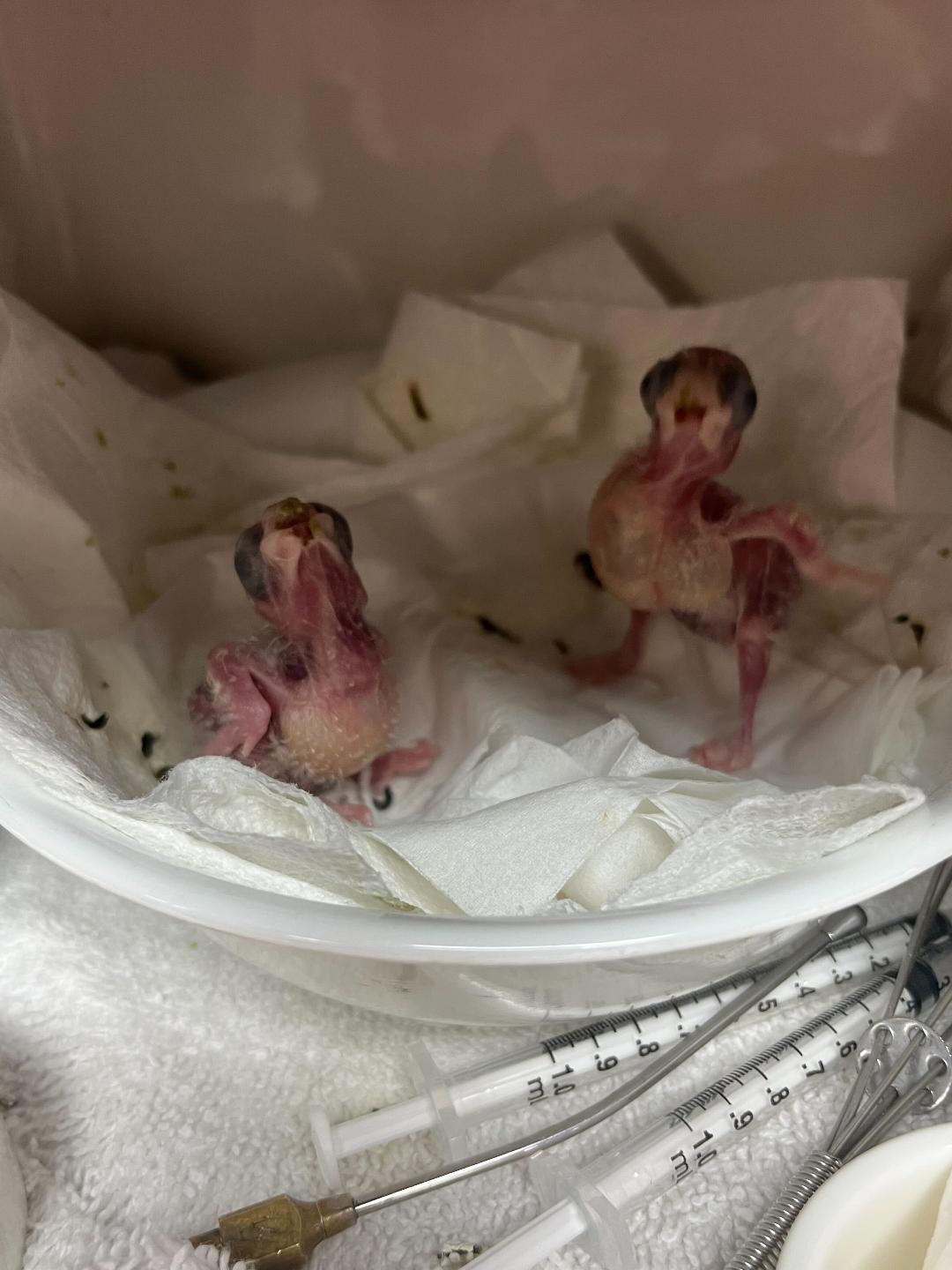
Hatchlings that didn’t grow
Furthermore, we often respond to third-party requests to take in birds without the owner’s knowledge or permission. While it is appropriate to act in situations where the owner is deceased or incapacitated, in all other cases, we must wait for the owner to contact us directly. Our eagerness to intervene has, in the past, led to accusations that Mickaboo was stealing birds—damaging both our reputation and our credibility.
Another concerning practice is the incubating and hatching of eggs found in nests during rescues. This contradicts Mickaboo’s ethos of discouraging breeding. We are not sure how often this happens, because as with everything in Mickaboo, the practice is opaque. In fact when a volunteer brought up the subject, Tammy responded, “Who’s hatching eggs.”23Slack: Who’s Hatching Eggs? Because if someone in Mickaboo were hatching eggs, she’d want to know. However, there are references to it in Slack conversations24nest of eggs25Hatching eggs and, during a large rescue, at least one volunteer was tasked with finding viable eggs.
These practices, driven more by impulse than by policy, have strained our relationships with shelters and private parties alike, and contribute to the very overcrowding that undermines our mission.
Extended Foster Periods
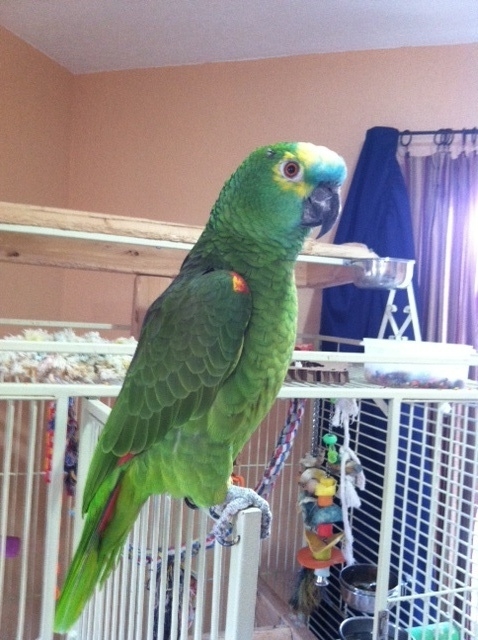
Ethel: 19+ years with Mickaboo, moved 7 times
Although Mickaboo maintains that birds are only accepted when foster homes are available, in practice this policy is inconsistently applied. Many new applicants who intended to adopt end up becoming fosters instead. Rather than focusing on placing long-term birds into permanent homes, new intakes are often prioritized.
As a result, a large number of birds remain in foster or supportive care for extended periods. Of the approximately 450 birds currently in our system, around 300 have been with Mickaboo for over two years, and roughly 150 have been in care for more than three years.
The result is that many birds spend years moving through a series of foster homes, contrary to Mickaboo’s stated commitment to ensuring permanent placements.
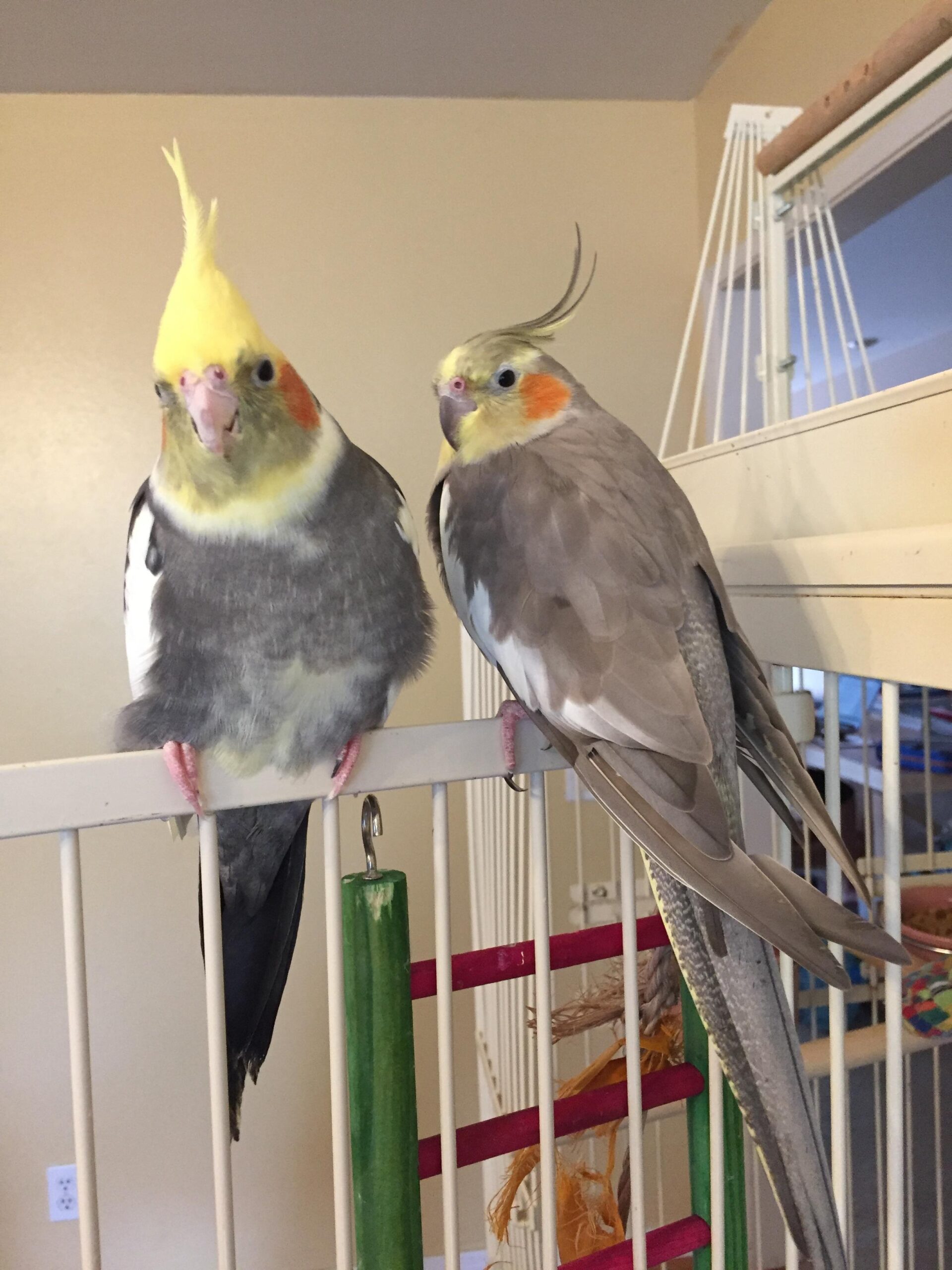
Cinnamon and Spice: 15 years with Mickaboo, moved 8 times
For example:
- Ethel, an Amazon, has been with Mickaboo since September 2005. She has been moved seven times, including two adoptions followed by returns.
- Cinnamon and Spice, cockatiels brought in during 2010, have cycled through eight foster homes and spent four months at FTB.
- BJ, another Amazon, has been moved nine times over the past twelve years.
These frequent transitions are highly disruptive to the birds’ emotional well-being, especially given that parrots form strong bonds with their caretakers. Being repeatedly relocated causes stress, confusion and behavioral decline. Even when birds remain in one foster home for years, failure to bond or lack of preventive care suggests their needs are not being fully met.
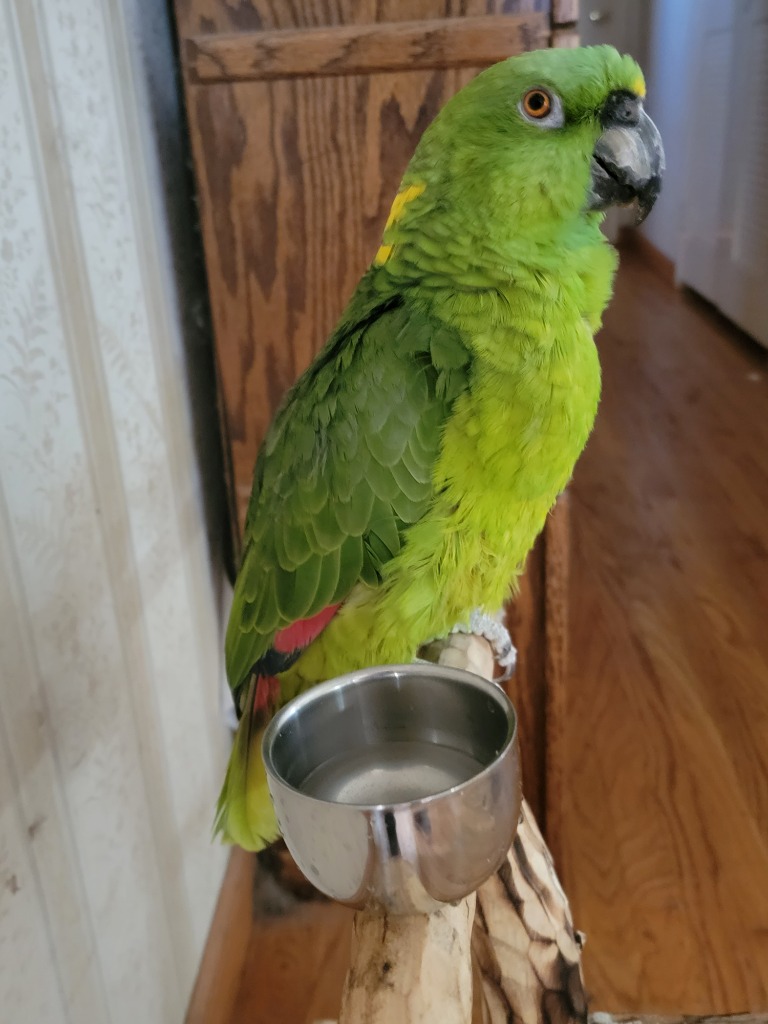
BJ: 12+ years with Mickaboo, moved 9 times
Another concern involves fosters who don’t adopt long-term fosters primarily so Mickaboo continues to cover veterinary expenses. While this is appropriate for birds who qualify for hospice care, in other cases it’s an abuse of the system. For instance, Rowan, in Mickaboo’s care since January 2009, has remained with the same foster for over 15 years. In that time, Mickaboo has spent more than $16,000 on his care, unsurprisingly at FTB, including substantial boarding costs. These practices not only strain Mickaboo’s financial resources but also raise serious ethical and conflict-of-interest concerns.
Some fosters do not actively communicate with coordinators, participate in adoption efforts, or make birds available for meet-and-greets with potential adopters. This lack of engagement impedes our ability to place birds in permanent homes and undermines our mission.
Moreover, fosters are often not informed that birds may remain in their care for several years, rather than the few months they were led to expect. In some cases, this has resulted in fosters threatening to surrender birds to animal shelters unless Mickaboo intervenes immediately—situations that could be avoided with better communication and planning.
Addressing these issues is essential to realigning Mickaboo’s practices with its mission. We must prioritize transparency with fosters, ensure accountability in long-term placements, prevent abuse of financial support systems and renew our commitment to finding permanent homes where birds can truly thrive.
Lack of Preventive Vet Care
Much as it is in humans, preventive care is essential to maintaining a bird’s health and well-being. This includes regular visits to an avian veterinarian, which can help caretakers avoid costly emergencies down the line. One of the strongest arguments for preventive care is how subtly birds display signs of illness, often masking problems until they become serious. Access to avian emergency care is limited, and well-qualified avian veterinarians may not be available when crises hit—often during holidays or after hours.
Though annual exams have upfront costs, they are often cheaper and more effective than treating advanced illness. A strong relationship with a knowledgeable vet is vital, allowing for early detection of hidden issues, establishing health baselines and receiving expert guidance on your bird’s environment and behavior.
However, Mickaboo consistently fails to provide preventive care for birds in its system. Routine wellness checks are not covered, even when requested by fosters or funded by specific donations. Mickaboo birds in long term foster care are not receiving the most basic preventive care that we demand from adopters. This undermines the organization’s ability to support long-term well being for the birds in its care.
A recent example26Records available upon request to interested parties. is Sweeney, a foster Senegal parrot who suffered a seizure-like episode several weeks ago. He had not received a wellness examination in the nearly ten years he’s been in foster care. The attending veterinarian expressed dismay and noted that many of the Mickaboo birds he treats are similarly overdue for their annual health evaluations.
The fact that a bird requiring urgent medical attention had not seen a veterinarian in a decade is a serious indictment of the organization’s standards of care.
In practice, when foster birds require medical attention, foster volunteers must navigate a convoluted and time-consuming approval process—one in which communication is often inconsistent or dropped entirely. This frequently results in significant delays in obtaining necessary care, despite the fact that Mickaboo’s foster agreement explicitly permits emergency veterinary visits without prior approval. In reality, fosters are given little guidance on how to determine what constitutes a true emergency, leaving many uncertain and hesitant in critical moments.
Control Without Responsibility
Mickaboo’s adoption contract attempts to exert an extraordinary degree of control over how adopters care for their birds, while simultaneously disclaiming responsibility for the birds’ long-term welfare.
A significant number of potential adopters have expressed discomfort with the contract, particularly the clause requiring organizational approval for euthanasia. For many, this is the primary reason they ultimately decide not to adopt.
As stated in the contract: Euthanasia must first be discussed with and approved by an MCBR director prior to the procedure taking place. This requirement remains effective for the lifetime of the Bird.27Mickaboo’s Adoption Contract
This policy is not only overly intrusive—it is, in practice, unworkable. Tammy, the director who insists on personally approving all euthanasia decisions, is often too overwhelmed to return calls, creating distressing delays in situations that require compassion and timeliness.
In January of this year, a volunteer28More information available upon request found themselves at an emergency veterinary clinic at 4 a.m. with a critically ill bird who was clearly near the end of its life. Given the circumstances, they made the humane decision—together with the attending veterinarian—to proceed with euthanasia without waiting for organizational approval.
The volunteer later reflected on how unworkable Mickaboo’s policy truly is, noting the absurdity of expecting someone to call a director at 4 a.m. for permission in such a situation. They emphasized how distressing it would be for an adopter to watch their bird suffer while waiting for a return call from leadership.
Another example involves a volunteer29More information available upon request caring for a terminally ill cockatiel. Although the adoption contract required consultation with Mickaboo regarding euthanasia, the volunteer intentionally chose not to reach out. Based on prior experiences and knowledge of the director’s strong opposition to euthanasia, they feared the bird would be taken back, subjected to surgery, and made to suffer further.
Instead, the volunteer prioritized the bird’s welfare and made the difficult decision to proceed with euthanasia. A necropsy later confirmed that the bird would not have survived the surgery, validating that the decision was both compassionate and medically sound.
The degree of control Tammy exercises over medical decisions for birds in Mickaboo’s care is a key factor contributing to excessive and often unnecessary medical interventions at For the Birds (FTB).
Questionable Veterinary Practices
A specific point of concern is Dr. Van Sant’s frequent reliance on hormonal treatments as a first-line intervention, a practice not aligned with some of the latest veterinary literature. Dr. Van Sant routinely prescribes Lupron for every bird displaying feather picking or normal hormonal behaviors, such as regurgitation. More concerning is the use of deslorelin implants, an FDA-indexed product, which is specifically prohibited for use in anything but ferrets.
This blanket approach is not supported by avian experts, as counter hormonal treatments should not be the first line of defense for such issues. Many board certified avian veterinarians emphasize the importance of addressing behavioral problems on a case-by-case basis (behavior is the study of one) and staying current with advancements in avian medicine. Attributing unexplained or non-specific clinical signs to hormonal issues by default can easily reflect outdated or incomplete methodologies based on personal observations or experience rather than peer-reviewed evidence.
Dr. Van Sant has also advocated for separating bonded pairs of birds as a response to chronic egg-laying in females.30Examples available upon request This practice can be viewed as both cruel and unnecessary, as there is no evidence that by removing the male, egg-laying can be prevented. Females can and do lay eggs without a male present, as other stimuli are also involved with activation of that hypothalamic-pituitary-gonadal axis. Leadership downplays the strength of pair bonding, though such separation inflicts needless distress on the birds, which form lifelong bonds. This approach disregards their emotional well-being and welfare, which are essential aspects of good husbandry and veterinary health care.
Similarly, Dr. Van Sant discourages the use of shredding or chewing materials and recommends removing bells from cages to prevent hormonal stimulation. These recommendations conflict with widely accepted avian care practices, which recognize shredding, chewing and play as vital to a bird’s mental and emotional well-being. Such enrichment activities are integral to preventing stress-related behaviors such as feather picking, and their restriction raises more concerns about the quality of care being advocated.
Another troubling issue involves dietary recommendations, including the promotion of high-potency pellets for adult african grey maintenance, exclusive recommendations for the use of specific brands, and reliance on Nutri-an Cakes, which are only available through veterinarians, specifically Dr. Van Sant. This creates dependency on certain products without evidence of their necessity or value as a dietary staple. High potency diets have significantly elevated fat in their makeup and high fat diets are a recognized long-term health risk factor for Grey parrots and atherosclerotic cardiovascular disease in general. Dr. Van Sant also advocates for meal feeding–the practice of feeding a bird just twice a day–another unnecessary deprivation-related treatment generally only appropriate for sick or overweight birds under the close watch of a vet, that can lead to digestive issues.
Further scrutiny surrounds the transparency of FTB operations. Volunteers report being denied access to certain areas of the facility and having inquiries about birds go unanswered. In a Slack exchange from January 2024, Sarah voiced frustration over the number of birds Mickaboo continues to board without FTB providing regular updates, including several wild conures. She questioned the claim that none of these birds were ready for discharge and noted that FTB makes it unnecessarily difficult to transition them into foster homes. This lack of responsiveness and accountability is a significant red flag for an organization that should prioritize open communication about the animals in its care. Given that the birds at FTB are Mickaboo property, it also raises questions of legality.
Lack of Behavioral Training, Inadequate Vetting and Follow Up
Mickaboo’s processes for vetting, training and follow-up often fall short, leading to significant issues in foster and adoptive placements. Potential fosters and adopters are frequently insufficiently screened, resulting in placements with individuals who may misrepresent their circumstances, fail to absorb training materials, or exhibit warning signs that are overlooked during the application process. Additionally, coordinators often neglect to review previous records before placing additional birds with fosters or adopters, allowing recurring problems to persist.
Mickaboo does not provide adequate training to fosters and adopters to address behavioral challenges, particularly for complex species like grey parrots, Amazons, macaws and cockatoos. These birds are often placed with inadequately experienced individuals, leading to their return after behavioral issues arise. Targeted, evidence-based behavioral interventions, both reactively as well as proactively, would significantly aid in addressing these issues, but fosters who wish to help their birds must pay for their own behavioral consultations.
Many behavioral issues—such as feather plucking, screaming and aggression—develop gradually in response to chronic stress, boredom or unmet social needs. These problems are frequently avoidable with proactive measures such as proper socialization, enrichment and training from an early stage. However, few adopters or fosters are educated on these needs, and behavioral concerns are often addressed only after they become severe. Without early intervention, these behaviors can become entrenched, reducing the bird’s adoptability and overall welfare.
Mickaboo often prioritizes convenience for humans over what is best for the birds in its care. Rather than investing in behavioral training to address issues like feather picking or aggression, the organization frequently attributes these behaviors to hormonal imbalances and turns to pharmacologic interventions such as Lupron injections or deslorelin implants. While these treatments may have valid applications in some cases, they are significantly more invasive and costly than behavioral approaches—and ultimately less effective in promoting long-term change.
In cases of egg-laying, for example, it is easier to break up bonded pairs and administer hormonal treatments than to implement environmental and behavioral modifications that would naturally reduce laying. This tendency reflects a broader pattern: relying on medical interventions rather than addressing the root causes of behavioral issues through changes in diet, environment and social structure.
Pharmacologic treatments like Lupron and deslorelin do suppress hormone production and, by extension, the behaviors associated with it—but only temporarily. These drugs do not help birds learn alternative, healthy behaviors. In fact, by masking the behaviors, they can make behavioral intervention more difficult, as trainers are unable to observe and work with the problem directly.
The issue stems, in part, from a lack of training in behavioral medicine. Most veterinary programs offer minimal instruction in applied behavioral analysis, leaving practitioners ill-equipped to manage behavior issues scientifically. Additionally, the cyclical nature of these treatments, which require ongoing administration, can inadvertently incentivize repeat procedures—especially when short-term results are interpreted as success.
Ultimately, while hormonal treatments may have a role in specific cases, overreliance on them reflects an incomplete understanding of avian behavioral health and a missed opportunity to support birds through more sustainable and humane methods.
Extended Hospitalization
Another problem is the issue of long-term hospitalization that occurs exclusively at For the Birds. While it is normal for vet clinics to hospitalize birds for the short term or board them for clients, the situation at FTB deviates significantly from standard practices. Birds often check in and never leave. There have been problems with Mickaboo coordinators not being able to see the birds. As shown above, internal communication shows that Mickaboo’s board is well-aware of the problem.
As of April 2025, there are approximately thirty birds boarding or hospitalized at FTB: one amazon, one african grey, five cockatiels, fifteen wild conures, three finches, four parakeets, a green cheek conure and one green wing macaw. Twenty-eight of those birds have been there longer than a month. Eleven have been there between a month and a year; five between one and two years, four between three and four years, five over five years, and one, Muriel, an African grey who arrived on 8/8/13, has been there over eleven years.
We have observed numerous cases where a bird is initially treated at one veterinary clinic before being transferred to FTB for a “second opinion.” Once there, the bird undergoes many often questionable tests and procedures and in some cases remains at the clinic for years. Reciprocal “second opinions” appear to be exceedingly rare, and are not accompanied by extended stays at other vet clinics.
Muriel
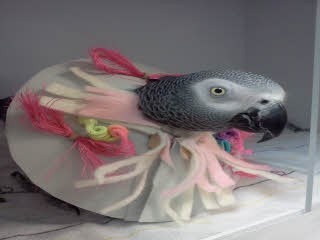
Muriel: 12+ years at FTB
Muriel came to Mickaboo on November 1, 2010, with severe trauma to her right wing tip. Initially treated with wound debridement and a bandage, she repeatedly removed the bandage and self-mutilated, prompting a mid-antebrachial amputation to prevent further injury and stabilize her condition.
Between November 14, 2010, and December 10, 2011, Muriel was treated for self-mutilation at Medical Center for Birds. Her care included the use of a cervical collar, medications such as Haloperidol, Omega-3 FA and Metronidazole, and a behavioral management plan incorporating foraging strategies to encourage positive behaviors. While her foraging skills and overall behavior improved, her prognosis for overcoming self-mutilation and living without a collar remained uncertain. Upon discharge, she was prescribed pain and anti-inflammatory medications, as well as antibiotics, but concerns persisted that further self-mutilation could necessitate another amputation. It was advised that she remain caged to prevent additional injury.
In late 2011, Muriel’s new foster took her to another vet, whom we’ll call Vet D, where it appears she faced the possibility of another amputation. Tammy suggested obtaining a second opinion from Dr. Van Sant before proceeding with surgery. Concerns were raised by her foster parent regarding Muriel’s stress levels, as boarding had previously led to increased self-mutilation. Tammy acknowledged these concerns and proposed an alternative approach involving an exam and review of her veterinary record.
Muriel was seen on March 6, 2012. She received Lupron, a deslorelin implant and a series of diagnostic tests. Despite these measures, the amputation surgery appears to have taken place on March 15, and Muriel was subsequently boarded for one to two weeks. Muriel was adopted by her third foster on 8/04/2012.
On August 8, 2013, Muriel was surrendered by her adopter, who was unable to stop her self-mutilation and expressed concerns about her quality of life, wanting the best possible care for her. Muriel was transferred to FTB, where she has remained in “short-term care” ever since. While she has not incurred boarding costs at FTB, her care costs since March 28, 2012, have amounted to $16,000.
According to FTB, Muriel’s situation today is more stable. She is the “office bird” at FTB. She wears a collar daily, but gets time without it. Oral diazepam stops the mutilation, but clearly sedaties her, and doesn’t work as a long term solution. Because of her special needs, Dr. Van Sant says she will likely never be “adoptable.” There are no reports of any targeted behavioral assessments or interventions that we can find to support these assumptions.
Boomer
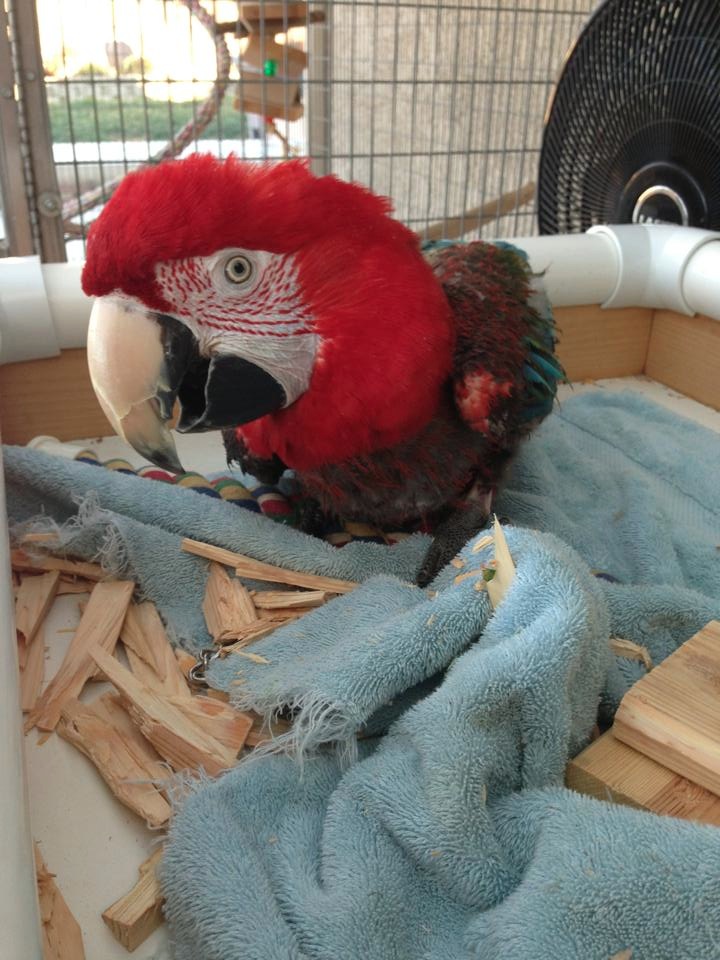
Boomer at his foster home
Boomer, a Green-wing Macaw, came to Mickaboo in October 2012 after years of severe neglect. He had suffered from untreated injuries, malnutrition and socialization challenges. Upon intake, Boomer exhibited significant physical impairments, including fused joints, dislocated limbs and severe intestinal issues. Despite his disabilities, he responded well to care at MCFB, undergoing a successful pygostyle amputation in 2013 to improve his quality of life. Boomer thrived in foster care for a number of years, becoming more active, social and vocal, with a noticeable improvement in his overall well-being.
After the sudden death of his long-term foster in 2019, Boomer was transferred to a new foster. In 2020, he went to FTB to address recurring intestinal issues, which had already been addressed years before at MCFB. Since his arrival at FTB, he has received extensive treatments and procedures, including Lupron injections and ongoing care for malodorous droppings and seizures.
While Boomer’s total veterinary costs from 2012 to 2020 were $7,270, his care at FTB has accrued an additional $105,000, bringing his total expenses to $112,270. Despite the significant investment in his care, questions remain about the necessity and efficacy of some treatments and his placement at FTB, given his prior progress in foster care.
Neglect of Challenging Birds
While all birds need similar care in terms of diet, environment, enrichment and companionship, some species are far more complex and challenging than others. Placing a challenging species with someone who has never had birds before without proper training or follow up can have devastating consequences for the bird. Some of these birds have been relegated to FTB and essentially forgotten about.
Max
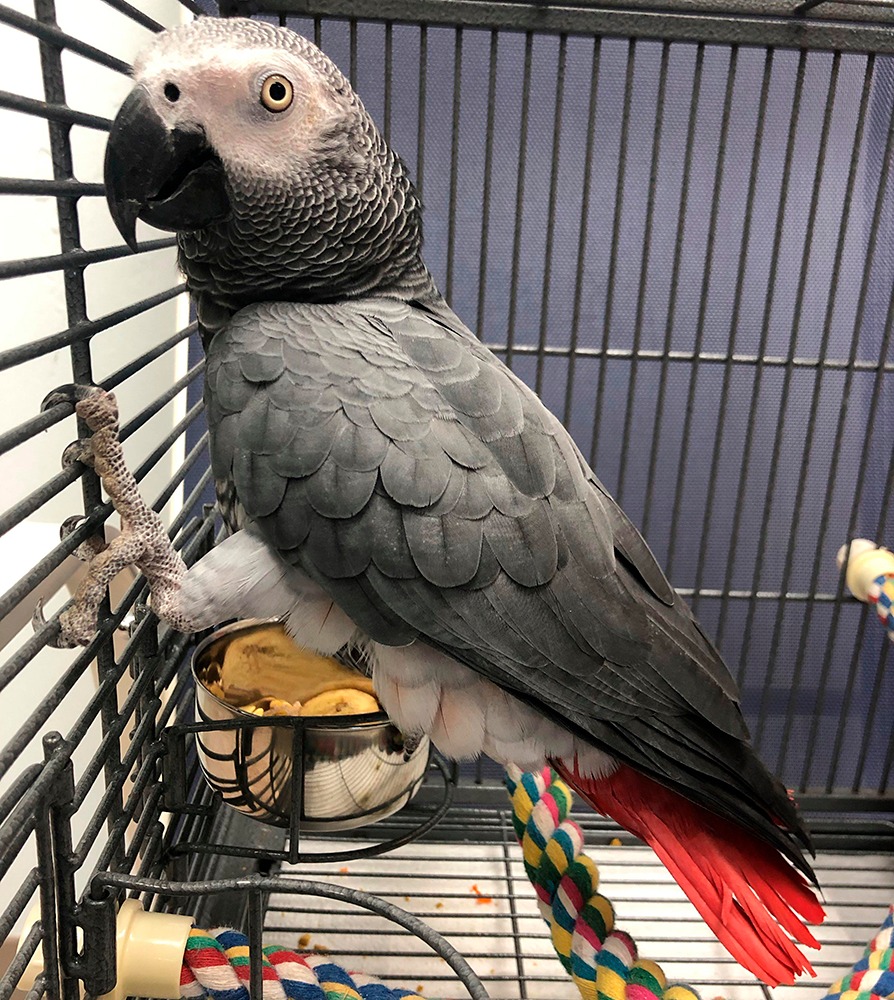
Max: 5 years at FTB
Max, an African Grey, came to Mickaboo in September 2017 after being surrendered by his previous family. He was a beloved companion but they felt he would be happier in a more suitable environment, citing signs of stress due to the presence of other African greys in their household. Entrusting Mickaboo with his care, they hoped to provide Max with a better life.
Unfortunately, Max’s journey proved challenging. His first adoption placed him with an inexperienced individual unfamiliar with African Greys, resulting in aggressive behavior and his return. Over several months, Max moved between multiple foster homes, none of which successfully addressed his needs. Labeled as irrevocably aggressive, he was transferred to FTB and subsequently passed to another rescue organization, which later ceased operations. Max returned to FTB on September 16, 2019, where he remained until July 27, 2024.
In July, Mickaboo’s African Grey coordinator found a foster willing to take Max, despite warnings from FTB and Mickaboo leadership about his history of significant aggression. Described as unpredictable and quick to lunge, FTB claimed Max required a high level of caution during handling. He was only allowed out of his cage for routine examinations, which were conducted using a towel in the dark. The foster was asked to sign a waiver acknowledging these challenges.
Max’s case underscores a critical gap in Mickaboo’s approach to handling “problem” birds. Once labeled aggressive, Max was sent to FTB and largely forgotten, despite the fact that behaviors like biting can often be mitigated with proper intervention and care. Fortunately, Max’s story has taken a positive turn. His foster has since officially adopted him, reporting that Max has shown no signs of aggression, including biting. He has transformed into a gentle and affectionate companion who enjoys scritches and interaction, demonstrating the impact of a patient and understanding home.
An important aspect of this successful case outcome appears to largely include Max’s departure from the care and treatments at FTB, and moving away from labeled constructs of what Max is, towards a more focused interventional strategy.
Evie
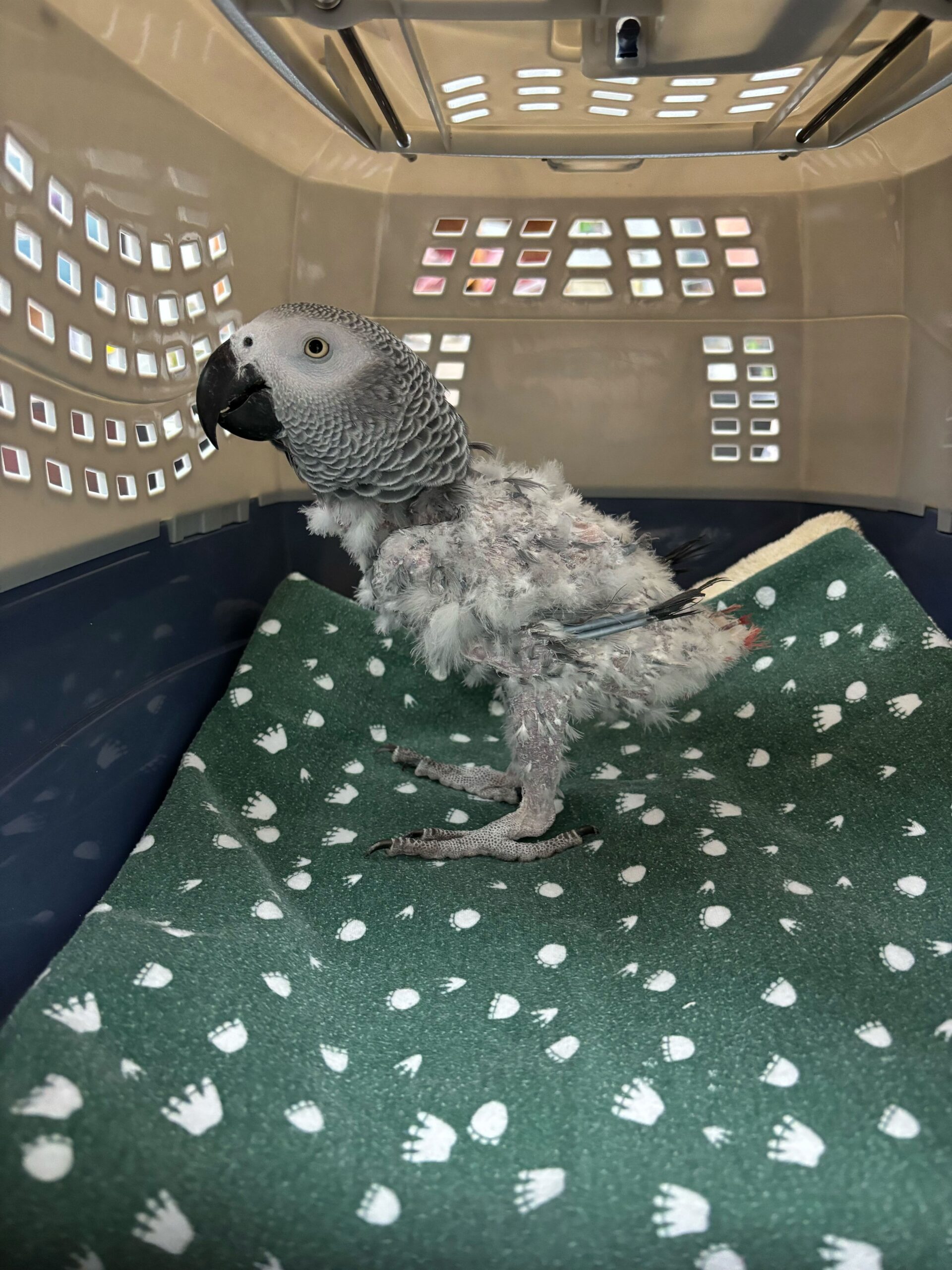
Evie: 4 yrs at FTB; $62,000
Evie, purchased from Napa Feather Farm in 2014, was surrendered to Mickaboo due to her owner’s changing circumstances. Upon intake, Evie was taken to FTB, where she was treated with Lupron for “hormonal issues.” Dr. Van Sant’s approach to managing hormones includes deprivational maneuvers such as restricting any chewable or shreddable materials, based on the assumption that such items encourage nesting behaviors, and advocating for meal feeding twice a day. According to internal emails from 2020, Dr. Van Sant classified Evie as “permanently damaged,” citing a “severe endocrine disorder” resulting from “hormonal deterioration.”31Permanently Damaged Greys
Dr. Van Sant reported that Evie remained in a perpetual hormonal state, leading to her placement in a cage without cup holders to further discourage nesting behaviors. It was claimed that when temporarily moved to another cage for cleaning, Evie immediately exhibited nesting behaviors by crawling into her food dish. Additionally, all materials that could be chewed or shredded were removed from her cage. At one point, Evie was transitioned to an outdoor aviary, with Dr. Van Sant citing prior successes in similar cases, though this approach raised concerns given the outcomes of such interventions in other birds such as Muriel.
Dr. Van Sant also stated that Evie was prone to “excitement seizures” and was most comfortable at cooler ambient temperatures, becoming agitated and barbering when it was warmer.
Fortunately, this is another story with a happy ending. Evie left FTB in September 2024 and was adopted a month later. By the time she left FTB, she had destroyed all of her feathers. Months later, she has exhibited no sign of seizures or issues with warm temperatures. She does not attempt to nest, despite having lots of paper and wood to shred and chew. With ample foraging opportunities and the undivided attention of someone who loves her, she is thriving. While she will likely never stop plucking entirely, now that she has other things to do, the behavior is significantly reduced.
As with Max above, an important aspect of the apparent successful case outcome appears to largely include Evie’s departure from the care and treatments at FTB, and again, moving away from labeled constructs with a more targeted approach to the issues at hand.
Further cases suggest similar outcomes and are available upon request.
Leadership and Accountability Failures
Mickaboo has been without a permanent CEO for over three years. Its acting CEO and COO resigned in October 2024, and there is no evidence that steps have been taken to fill either role. Meanwhile, the board has repeatedly failed to address long-standing systemic issues—many of which were already identified in a proposed board meeting agenda as far back as January 2011. These problems are compounded by a persistent lack of transparency around finances, record keeping and the use of donor funds.
Leadership Void
Mickaboo’s former CEO, Michelle Yesney, resigned in 2022. In her resignation letter, Michelle stated that the organization had grown too complex for volunteer leadership alone and recommended hiring a paid Executive Director with professional nonprofit experience to provide strategic leadership and support fundraising.
Following Michelle’s departure, COO Sarah Lemarie was appointed as “interim CEO” in April 2022. While this role is typically short-term and meant to provide temporary continuity, Sarah remained in the interim role for two-and-a-half years, with no evidence that the board made any effort to find or recruit a permanent replacement. There is no mention of such efforts in board meeting minutes or other communications that we’ve been able to find. This prolonged delay reflects a troubling lack of succession planning and strategic foresight.
In a follow-up message to a volunteer inquiry in 2023, Sarah, as acting CEO, explained that Mickaboo had previously operated without a formal COO and suggested the position remain unfilled, as it was not deemed critical to current operations. The message emphasized the importance of species coordinators and recruiting for urgent operational roles, such as filling gaps in species teams, rather than focusing on executive titles. However, this too failed to occur.
In October 2024, Sarah resigned from her position as both COO and Acting CEO. Despite this significant development, the board has yet to make a formal announcement or name a replacement. This ongoing silence raises concerns about transparency and compliance with 501(c)(3) governance expectations.
During the November 2024 board meeting, members discussed a “soft approach” to announcing the leadership transition. Michelle was tasked with drafting a statement, and the board considered using financial transparency to help bolster donor confidence. A draft statement was scheduled for review in the next meeting.
To address the leadership vacuum, the board proposed a temporary governance structure with Michelle, Tammy and Pam acting as an interim leadership group. They committed to weekly meetings and dividing responsibilities amongst themselves. Tammy also proposed a temporary moratorium on non-urgent bird intakes to reduce operational strain. We have no evidence any of these plans were followed through upon.
Since Sarah’s departure, day-to-day leadership has been informally assumed by this “temporary” group. While all three members are long-serving officers, they lack familiarity with the internal systems and infrastructure that support Mickaboo’s operations. Rather than improving the organization’s functionality, their involvement has sometimes resulted in additional burdens for volunteers working to keep things running.
This failure leaves the organization structurally vulnerable and overly dependent on volunteers already stretched to their limits. The absence of clear leadership, a defined chain of command, and a strategic hiring plan continues to undermine Mickaboo’s capacity to operate effectively and sustainably.
Apathetic Board
Resolving leadership gaps is just one of many issues the board has consistently neglected. Internal communications show that board members are fully aware of the organization’s systemic problems, yet they repeatedly fail to take meaningful action. The wild conure situation, for example, has been debated for years without resolution. As recently as the October board meeting,32Recorded notes available on request Tammy acknowledged Mickaboo could no longer manage both domestic parrots and wild conures, admitting, “It’s just too much.” She then expressed a wish that someone would create a separate organization for the conures—similar to Palomacy.
Adding to the concern is a lack of transparency around board activities. The board doesn’t consistently archive board meeting minutes in one place. This raises questions about whether meetings are being properly documented or whether meetings are taking place at all. As of April 2025, there is no indication that the board has acted on anything since November 2024. The only message posted on the Boardmembers listserv this year was in January, when Pam requested feedback on a financial document. Either the board has moved its discussions elsewhere, or it has simply stopped functioning.
Lack of Transparency
Beyond the board’s lack of transparency on leadership and operational matters, Mickaboo suffers from broader gaps that undermine accountability and trust. Many volunteers have voiced concerns that they are left in the dark about strategic decisions and have no meaningful way to share feedback or express concerns. Despite being the ones who run the organization day-to-day, volunteers are excluded from decision-making processes. Mickaboo claims it has no stakeholders—but in reality, its volunteers are its stakeholders. Yet the board makes no effort to engage with them through open meetings, regular communication or an open-door policy. This disconnect deepens internal divisions and erodes organizational cohesion.
Record Keeping
Key operational data, such as surrender and adoption fees, veterinary invoices, necropsy reports and diagnostic test results, are inconsistently recorded or entirely absent from the animal management system (ASM). This lack of documentation not only prevents meaningful oversight of care and expenditures but also creates confusion amongst volunteers, who rely on accurate records to make informed decisions. Notably, veterinary invoices from clinics other than For the Birds are often missing, raising concerns about selective reporting. These ongoing issues reflect a broader culture of opacity that undermines internal accountability and erodes confidence in the organization’s leadership.
The CFO—and potentially other directors—store large amounts of sensitive, critical data on their personal computers, with no organizational oversight or shared access. This grants them exclusive control over what information is disclosed, to whom, and when. The CFO herself has privately admitted that, due to the manner in which she maintains financial records, conducting an independent audit would be difficult–raising more serious concerns about transparency and accountability.
Use of Donor Funds
Donors are often unaware that their contributions may be used for off-mission purposes such as the care of wild conures or long-term boarding. Additionally, there is limited visibility into decision-making, financial allocation and the conditions in which many birds are kept, making it difficult for stakeholders to hold the organization accountable or make informed contributions.
When donors surrender their birds and contribute funds for their ongoing care, they are not informed that these donations are allocated to the general fund rather than reserved for their specific bird. Once in foster care, these birds typically receive no preventive care, and the donated funds do not follow the bird after adoption. This lack of transparency can mislead donors and leaves critical gaps in the long-term care of the birds they intended to support.
Ineffective Whistleblower Policy
Recent updates to Mickaboo’s internal governance introduced a “Whistleblower Policy” page on the organization’s wiki in order to satisfy the requirements for achieving a higher score from a watchdog organization that rates nonprofits. While this is a good first step, it should have been addressed months or years ago. Furthermore, the person to whom complaints are directed is a long standing member of the leadership team. Mickaboo’s leadership has demonstrated a preference for decisions that consolidate control and discourage questioning, which adds to the concern that this policy could be used to suppress meaningful change.
From an organizational perspective, the distinction between internal and external compliance is significant. There is skepticism about whether this policy genuinely reflects a commitment to transparency and ethical governance or if it is intended to manage internal dissent and burnish Mickaboo’s public image while maintaining the status quo. Ultimately, any substantial reform is likely to come from external pressure rather than internal adjustments. It is for this reason that this report was undertaken.
Operational Deficiencies
Mickaboo’s internal culture is deeply dysfunctional, marked by inconsistency, micromanagement and a lack of accountability. Volunteers and applicants are expected to operate within a system marked by poor communication, opaque decision-making and favoritism. This has resulted in volunteer shortages, high turnover and widespread burnout. Many former volunteers have resigned due to dissatisfaction, with countless others expressing frustration at the organization’s inability to manage or retain volunteers.
Ineffective Leadership
Michelle Yesney, Mickaboo’s long-serving CEO, who resigned in 2022, but who has taken a more active role lately, has a passive-aggressive management style and seems to be intent on asserting dominance and discouraging dissent. This behavior not only alienated numerous volunteers, leading many to quit, but also at one time triggered a public relations crisis so severe that Mickaboo sought the assistance of a pro-bono PR firm to mitigate the fallout.33Information available upon request.
The CEO’s interim replacement and Mickaboo’s most recent operations leader, Sarah Lemarie,34Sarah Lemarie, Mickaboo’s COO and acting CEO, resigned in October 2024, after we had already begun this report. We believe it is important to document the issues she created, as these challenges have become ingrained in the organization. Additionally, similar problems have arisen under previous leadership, highlighting an ongoing pattern. has employed a leadership style marked by micromanagement, criticism and favoritism, which undermines team morale and organizational efficiency. She often scrutinizes volunteers’ work, focusing on minor details and critiquing choices even when multiple acceptable approaches exist. Her feedback, frequently vague and unconstructive, frustrates team members and hinders collaboration. This micromanagement diverts attention from broader priorities and contributes to inefficiencies. Additionally, her unwillingness to enforce key policies, such as requiring coordinators to update the ASM database when Potential Adopters (PAs) are approved, exacerbates administrative gaps.
Tammy Azzaro wields considerable influence over decision-making, often exceeding the authority appropriate for her role. She has made unilateral decisions—such as placing birds with non-Mickaboo-approved caretakers, renaming them, or second-guessing veterinary treatments without adhering to established protocols—that bypass organizational processes. This unchecked influence creates challenges in maintaining consistency, accountability and alignment with Mickaboo’s mission and goals.
Tammy plays a vital role as a frontline advocate for Mickaboo, managing urgent rescues and coordinating with veterinarians. However, her approach prioritizes reactive, on-the-ground actions over strategic planning. Her communication typically follows three patterns: sharing emergency intake updates, relaying veterinary consultation details in fragmented ways, and managing bird placements outside established procedures. While her dedication to rescue work is unquestionable, her administrative shortcomings disrupt the broader team’s efforts. Her focus on immediate actions comes at the expense of long-term organizational protocols.
Broken Organizational Culture
Species coordinators are nominally empowered to make decisions about bird placements, intakes and applicant approvals, but in practice, leadership frequently intervenes and overrides them. Coordinators have had decisions reversed without explanation, even when they decline applicants for valid concerns. In other cases, leadership has unilaterally rejected candidates who had already been approved by coordinators. These inconsistencies erode trust, create confusion and diminish the coordinators’ authority.
One volunteer described being told in 2010 that they had “100% decision-making authority” as cockatiel coordinator, only to find that Tammy and Michelle were independently accepting birds into the system without consultation. When he complained, he was effectively fired.35Information available upon request This is something that continues fifteen years later, and it has led to serial resignations from the cockatiel coordinator position. Similarly, Sarah has a well-documented pattern of taking control of tasks while sidelining others. Volunteers report feeling dismissed and undervalued, which has led many to disengage. Essential work is often left unfinished because those willing to contribute are discouraged from participating.
Leadership’s decision-making is marked by favoritism and selective enforcement of rules. Applicants have been disqualified for specific traits or incidents, while others with nearly identical profiles were approved. Some fosters have bypassed required steps entirely—such as applications, phone screens, or home visits—while other candidates are subjected to prolonged delays or excessive scrutiny for minor concerns. One example involved a foster whose dog killed birds in her care. Although marked as “Unapproved,” she reportedly still houses foster budgies and was considered for more birds until volunteers complained.
These double standards extend to affiliations: individuals connected to For the Birds (FTB) have reportedly been approved with little or no oversight, while even veterinarians from MCFB have been made to complete parts of the standard process. Sarah has also been known to delay application reviews for months, despite having already formed a negative opinion early on—prolonging the process with no intention of approval.
Mickaboo often holds applicants and fosters to high standards that the organization itself does not consistently meet. Birds are housed in conditions that would not pass Mickaboo’s own home visit requirements. These contradictions undermine the organization’s credibility, alienate qualified applicants and volunteers, and ultimately hinder its mission.
This pattern of micromanagement, inconsistent enforcement, and subjective decision-making reflects a lack of organizational accountability and strategic coherence. By favoring personal discretion over policy and transparency, leadership undermines trust, drives away capable volunteers, and places birds at risk through ill-considered placements. The result is an unstable and inefficient system that works against Mickaboo’s stated goals.
High Volunteer Turnover
Mickaboo suffers from high volunteer turnover and low morale, largely due to poor leadership, lack of support and persistent systemic issues. The organization provides little to no onboarding or training, leaving new volunteers to navigate a complex environment without guidance. This fosters an “insider” culture dominated by long-standing members, while newer volunteers struggle to find meaningful ways to contribute and often leave within weeks.
The former COO’s micromanagement and tendency to take on tasks herself limited opportunities for others to participate or learn. Volunteers who attempted to engage were often discouraged or sidelined, and many avoided interacting with her altogether. These dynamics created a sense of frustration and futility, as volunteers felt their efforts were undervalued and their time wasted. Essential tasks frequently went unfinished because responsibilities were neither shared nor supported, compounding the sense of dysfunction and driving further attrition.
Slow and Inefficient Processes
Mickaboo’s operations are hampered by chronic inefficiencies, unclear expectations and leadership bottlenecks. Until a year ago, the application process was excessively slow, often taking months without communication with potential adopters. Some applicants were strung along for extended periods due to not only lack of volunteers but also personal biases amongst decision-makers. After the most recent applications coordinator streamlined the process last year, wait times were greatly reduced. However, there are no policies in place to prevent such issues from returning now that Mickaboo has expelled the coordinator for her role as a whistleblower.
Two systemic issues compound the problem. First, Mickaboo is reluctant to address difficult cases—whether those involve birds, applicants or underperforming volunteers. Second, there is a pervasive attitude of arrogance, where applicants are treated as if their ability to endure drawn-out, frustrating procedures is a measure of their suitability for handling birds. Even experienced applicants who question the process are frequently met with punitive delays or dismissive responses.
While Mickaboo requires all applicants to follow the same procedures, there is no corresponding accountability for internal roles. Coordinators are not held to specific timelines and leadership hesitates to replace inactive volunteers out of fear of conflict. This leaves critical gaps unaddressed and fosters an environment in which delays are the norm. Volunteers who might otherwise help are left uncertain about their roles or afraid of overstepping boundaries.
The problem is further intensified by a leadership culture that discourages delegation. Sarah in particular has been known to centralize control—taking on more responsibility than is sustainable and dissuading others from contributing. This behavior results in unfinished tasks and neglected priorities. Other key positions follow a similar pattern. For example, Pam, the fundraising coordinator, lacks professional experience and is already stretched thin, though she has consistently refused more professional help. As a result, Mickaboo’s fundraising efforts remain small, local and underdeveloped, lacking the structure and scalability of a well-run nonprofit.
Ultimately, Mickaboo’s management structure creates persistent bottlenecks. With no formal performance expectations and a culture that avoids accountability, progress stalls. Volunteers are frustrated, critical tasks go undone and the organization is left unable to function at the scale its mission demands.
Education and Communication Challenges
Outdated and Inaccurate Materials
The current Basic Bird Care Class structure suffers from critical issues that undermine its effectiveness. It is riddled with inaccuracies,36Examples lacks cohesion and is presented in an overly lengthy format. Participants often struggle to stay engaged, as the material includes irrelevant, unnecessary or more advanced content than should be presented in a beginning class. There is a reluctance to invest in platforms that could streamline the process, despite clear evidence that doing so would improve the experience.
A recurring issue is the poor preparedness of participants completing the approval process. Many prospective adopters have birds living in substandard conditions, such as dirty or undersized cages, inadequate or harmful toys like happy huts, and diets consisting largely of junk food. These individuals often express surprise at learning basic care practices that should have been thoroughly addressed in the class. This suggests that critical information is either not being conveyed effectively or not being retained.
Furthermore, feedback indicates that some instructors are difficult to understand and that the sheer volume of material presented overwhelms participants. Certain content, better suited for a more advanced class, contributes to this overload and detracts from the core objectives. The class follow-up email also fails to provide adequate support. It includes links to outdated or unreliable resources, some of which are broken.
Overall, the class in its current form is ineffective at delivering the essential knowledge participants need. Significant improvements are necessary to ensure that critical information is accessible, accurate and appropriately targeted to the audience.
For years, Mickaboo leadership has discussed developing an online, self-paced basic bird care class, but like many internal initiatives, the project has stalled repeatedly. For instance, in November 2020, Sarah sent an email in which she proposed exploring LearnWorlds or Teachable to create online modules, videos and graded tests for a self-paced learning experience. She aimed to make teaching more scalable and sustainable. The thread includes responses indicating interest in the idea and concerns about the amount of information provided in current classes. The idea was taken up again several times over the next few years, but never followed through upon.
In August, a group of volunteers revived the effort but quickly found the free platform leadership had selected to be cumbersome and unsuitable. Since Mickaboo was unwilling to invest in a more effective platform, volunteers independently researched and identified a cost-effective alternative that was user-friendly for both instructors and students–LearnWorlds, which Sarah had identified in 2021. They developed a revised version of the class with updated content, hoping that presenting a fully built and polished course would encourage leadership to move forward.
However, Sarah—who had already stepped down as COO—viewed this effort as a usurping of the project, despite having made little progress during the four years it had been under her oversight. The volunteers involved were the same ones who had resumed the work in August and made substantial advancements, including identifying the platform’s shortcomings. While volunteer educators responded positively overall to the new class, leadership delayed approval. Feedback, when it finally came, focused largely on stylistic preferences rather than essential revisions, despite a clear request to limit comments to critical issues. Although the core content updates are now complete, leadership continues to stall and the class remains unlaunched.
In the meantime, volunteers continue to pay for and are actively using the new platform to support home visit and phone screen training. Meanwhile, the live Zoom class—taught by increasingly overextended volunteers—has been reduced from twice a month to once a month, creating delays for applicants. Its fixed day and time availability, and its three-hour length, makes it difficult for many to attend. A self-paced online class would resolve these issues by allowing applicants to complete it on their own schedule, improving accessibility and enabling applications to be processed more evenly throughout the month rather than in a single rush.
Recent events have taken an interesting turn. On May 9, 2025, Michelle Yesney emailed the volunteers who created the training class, demanding that they implement all requested changes and grant Sarah administrative access to the platform by 5 p.m. on May 14. No consequences were stated at the time. Nevertheless, on May 16, Michelle sent another email, informing these volunteers that, because they had not met the deadline, they were being expelled from Mickaboo.
The justification for their expulsion simply does not hold up. Volunteers were told they were being removed from the organization for failing to meet a deadline to give Sarah administrative access and make specific changes to a class they themselves had developed and were personally paying for. It’s difficult to see how declining to hand over control of a privately-funded volunteer initiative constitutes a legitimate reason for dismissal from a nonprofit. It’s an unconvincing rationale—one that makes sense only if the real reason had nothing to do with the class at all.
Poor Volunteer Training
A related concern is the absence of structured volunteer training at Mickaboo. There is no formal onboarding process, orientation or user-friendly centralized platform for accessing training materials. Some of the technical systems in use are not intuitive, making it difficult for new volunteers to navigate their roles effectively. As a result, coordinators and administrators often lack familiarity with organizational guidelines, leading to inconsistent practices and decision-making. While some volunteers have taken the initiative to create instructional resources using platforms like LearnWorlds and Scribe, these tools remain unofficial and unsupported by leadership, with volunteers covering the costs themselves.
Outdated Website and Mediocre Social Media Presence
Mickaboo’s current website is outdated and disorganized. Many pages are non-compliant with modern responsive design standards, making them unsuitable for mobile and tablet viewing. Until recently, the majority of these pages were irrelevant comics that detracted from the site’s credibility and left Mickaboo vulnerable to potential copyright infringement. Mickaboo finally received a “cease and desist” notice from one copyright holder several months ago, and the comics have finally been removed.
Furthermore, information available on the website is poorly organized and difficult to find, with inadequate descriptions of procedures such as adopter applications and animal surrenders, leading to user confusion and an inability to find answers to common questions. Additionally, the site hosts problematic content such as personal blogs unrelated to the organization’s mission, raising concerns about professionalism.
A lack of governance exacerbates these issues, with senior management and volunteers posting content without adherence to a formal change control process, resulting in inconsistent quality and reputational risk. While SEO consultants regularly flag these issues, there is little focus on addressing the problems, leading to missed opportunities for engagement and visibility.
Internal disputes about content oversight and cleanup further complicate the situation. Some team members advocate for the removal of outdated and irrelevant materials, while others push back, delaying necessary changes. Proposed solutions, such as hiding or archiving non-compliant pages and creating SQL scripts for cleanup, have stalled due to internal politics.
To address these challenges, the organization should conduct a full content audit, prioritizing the removal or improvement of low-quality pages. Establishing a strict content approval process and restricting unmanaged contributions—especially from senior management—will ensure greater consistency and quality.
In addition, the website requires a redesign to align with modern standards, focusing on responsive design and user experience. Experienced web developers or skilled volunteers could assist in creating templates that enhance both functionality and accessibility. To mitigate risks, the organization should immediately address copyright concerns by reviewing and removing questionable materials and ensuring compliance with intellectual property laws.
Finally, fostering alignment amongst stakeholders is crucial to balancing creative contributions with professional standards. By tackling these issues systematically, the organization can transform its website into an effective, credible platform that supports its mission and engages its audience.
Mickaboo’s social media channels could also be improved. Social media efforts have been largely monopolized by the same two individuals—Pam and Sarah—who have taken on numerous other responsibilities within the organization. Neither has professional expertise in digital media, nor the time to manage it effectively. As a result, the content often feels formulaic and lacks strategic engagement.
Unfortunately, as with many other areas of Mickaboo, this centralization of control has discouraged skilled volunteers—particularly those with professional backgrounds in audio, video, and content creation—who initially offered their services but were never given the opportunity to contribute. This pattern continues to limit Mickaboo’s potential for growth and outreach.
Neglect of Infrastructure
Mickaboo relies on an outdated server to run its communications and management systems, including ASM, OTRS and its website. The server is frequently slow and unreliable, with recurring outages that disrupt access to critical tools and hinder daily operations for both staff and volunteers. Although replacing the server has been proposed multiple times—and funds and a plan have been available—action is consistently postponed once the immediate problem subsides.
In September 2024, then-COO Sarah Lemarie stated that a new server would be implemented within six months. As of April 2025, no progress has been made. Following yet another server failure, $500 was spent to upgrade the existing five-year-old backup unit with additional RAM and an SSD. While the tech team acknowledged this as an improvement over the twelve-year-old primary server, the upgrade is a temporary fix that delays a necessary infrastructure overhaul and wastes resources in the process.37Server Slack Conversation
Conclusion
Mickaboo’s core mission to rescue, rehabilitate and rehome companion birds is being steadily undermined by systemic dysfunction and persistent leadership failures. Inconsistent adoption practices, volunteer attrition, misuse of donor funds, lack of preventive and behavioral care, and a refusal to implement necessary reforms have created an organization that is increasingly reactive, opaque and misaligned with best practices. Critical decisions are often made without input from qualified professionals, and key initiatives are delayed or blocked altogether. While volunteers continue to give generously of their time and resources, the organization’s internal structure and leadership approach routinely sabotage those efforts—leaving the birds without the level of care they need and deserve.
If Mickaboo is to uphold its responsibilities to both donors and the animals it serves, immediate structural reform is essential. This includes implementing transparent financial practices, modernizing volunteer training, investing in preventive and behavioral care, and seeking guidance from credentialed specialists. Without meaningful change, Mickaboo risks failing in its fundamental mission and betraying the trust of the community, its volunteers and, most importantly, the vulnerable birds in its care.
Given the depth and persistence of these systemic failures, it is no longer sufficient to hope for incremental change from within. The current board has repeatedly demonstrated an unwillingness or inability to lead with transparency, accountability or urgency. For the sake of the organization’s future and the well-being of the birds in its care, we urge the full board to step down and make way for a restructured leadership team—one committed to ethical governance, professional expertise and true mission alignment. Mickaboo’s continued existence depends on it.